
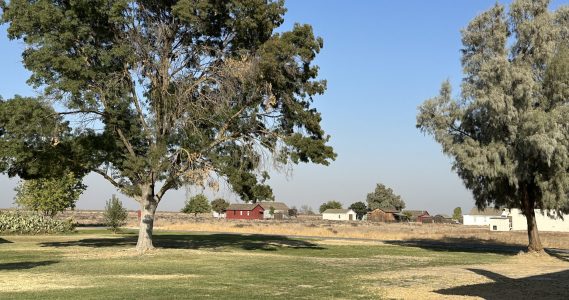
Allensworth Schoolhouse, CA 2026

In the heart of the San Joaquin Valley, lies Allensworth, the only town in California to be founded, financed, and governed by African Americans.
PROJECT PARTNER: California State Parks
NEW SESSION DATES: September 6-11, September 13-18, and September 20-25
CAPACITY PER SESSION: 7 Volunteers + 1 Kitchen Helper
PROJECT SUPERVISOR: Aric Smejkal!
CREW LEADER: Ashley Aus!
Project Site Description & History
Within the San Joaquin Valley lies the unincorporated community of Allensworth, California. Since 1974, the town has been memorialized as a state park, and is officially known as the Colonel Allensworth State Historic Park. The park has been the subject of both a 2022 documentary film and historical novel, and is significant given it’s status as the only California town to be founded, financed and governed by African-Americans.
The town was first established in June of 1908 by Colonel Allen Allensworth and Professor William Alexander Payne. Colonel Allen Allensworth was a notable chaplain, colonel, city founder, public speaker, and theologian. Allensworth was born into slavery in Kentucky and joined the 44th Illinois Volunteers as a Union solider during the Civil War. In addition to serving as a chaplain within the United States Army, he eventually became the first African-American to reach the rank of lieutenant colonel in the United States Army. His legacy was one of service and honor, as he dedicated much of his life to inspiring African-American youth and working to improve communities. This philosophy carried over to his work in establishing Allensworth, California upon his retirement.
The creation of the town was part of a larger concept called the California Colony and Home Promoting Association, which operated with the goal of creating a self-sufficient and self-governing community for African-Americans in California. Inspired by the work of Booker T. Washington, Allensworth traveled the United States sharing the message of African-American self-reliance with communities across the country until he and his family settled in California in 1906. It was there that he met a professor named Professor William Payne, and together they established both the California Colony and Home Promoting Association and the town of Allensworth.
In 1908, the association purchased around 800 acres of land along the Sante Fe rail line in Tulare County from the Pacific Farming Company. The site was in a prime position, given its location along the railroad and exceptional agricultural conditions. By 1909, the town of Allensworth, California was on the map, with a reputation that drew settlers from far and wide. The existence of a town in California that was founded, financed, and governed by African-Americans had reached many ears, with some even willing to buy property and relocate to the town without having seen the area first. With the promise of self-sufficiency realized and the possibility of controlling one’s own destiny on the horizon, the town of Allensworth grew and experienced a population boom in the early twentieth-century.
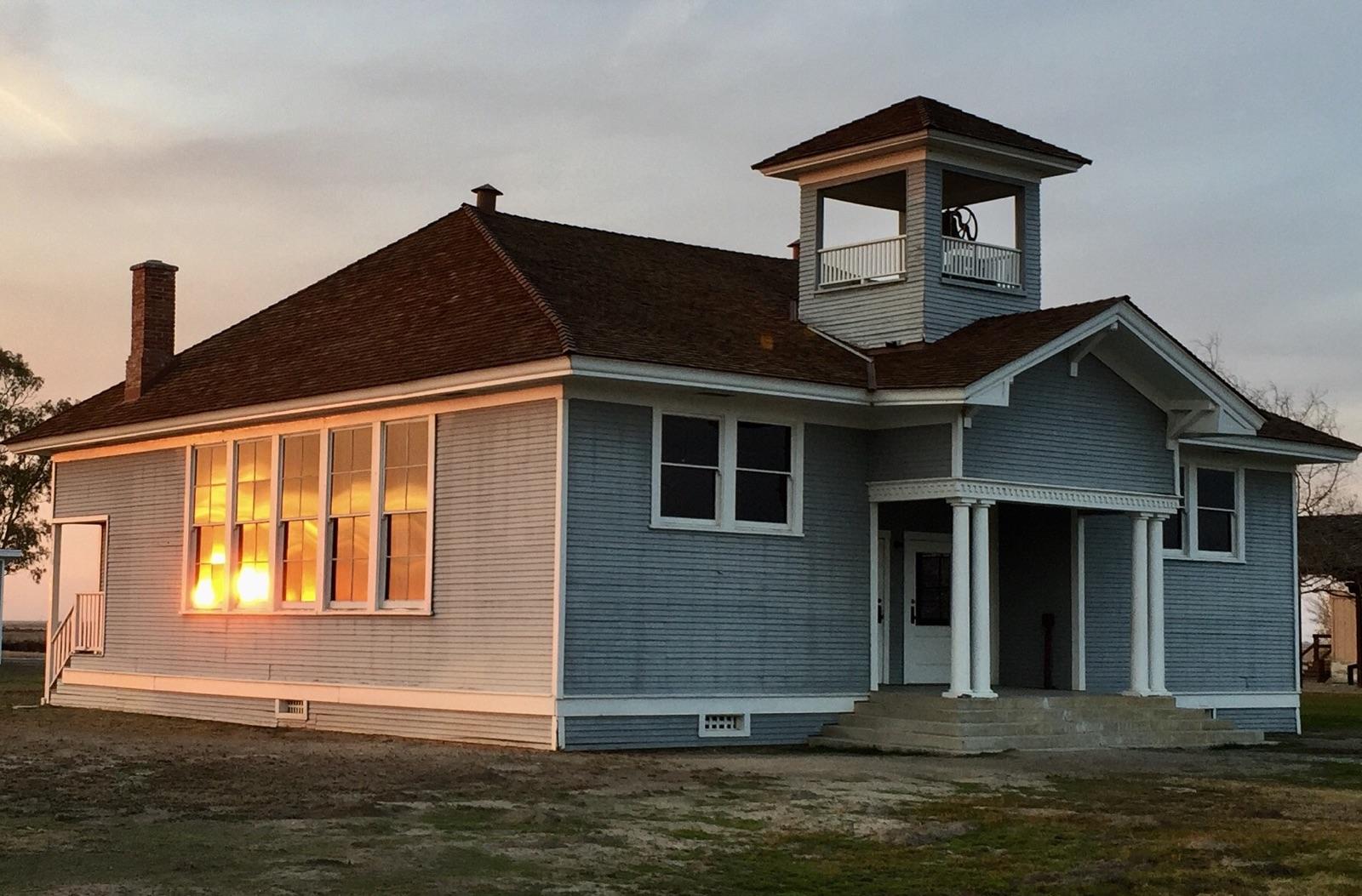
Most notably, the creation of the town schoolhouse in 1910 resulted in Allensworth becoming California’s first African American school district. The town’s many institutions and businesses included a library, hotel, church, and general store. The schoolhouse was regarded as one of the largest and most important buildings located within the town, and it remained in use until 1972. The Allensworth School was constructed in 1912. It contains a wood frame (with wood siding), cedar shingles, a concrete foundation, and it measures forty-feet by forty-feet. The interior of the building contains a sliding partition that allows for room separation. It also features a stage and two dressing rooms. This school has been a hub for the community, serving as the town school, social hall, and center for community entertainment.
Despite the initial booming growth, a few major factors contributed to Allensworth’s eventual decline. In 1914, a major railroad stop was moved from Allensworth to a different location. Additionally, the town’s water supply had been dwindling for years, causing a severe water shortage in Allensworth. Eventually, this water shortage led to a drought that disturbed crops. Finally, the death of Colonel Allen Allensworth left the town without their leader. These three events spurred an economic downturn in the area and after World War I, many residents left the town.
In spite of these difficulties and a scheduled town demolition in the 1960’s, Allensworth has prevailed. Many past residents and passionate individuals advocated for the site to become a state historical site. In 1972, the Allensworth Historic District was added to the National Register of Historic Places and the park was opened in 1974. The complex contains nine preserved buildings, and the town continues to host events, programming, and celebration to honor this special historical site.
We’re honored to have the privilege of restoring this significant African-American historical site, and we hope you will join us this May as we head to the heart of California for a few weeks of impactful preservation work at the Allensworth Schoolhouse.


Location and Logistics
SESSION DATES: September 6-11, September 13-18, and September 20-25
Please plan to arrive at the campsite no earlier than 5pm and no later than 7pm on the first day of your session.
LOCATION: Located approximately 50 minutes northwest of Bakersfield, California!
MAP to the ALLENSWORTH SCHOOLHOUSE
ACCESS: 





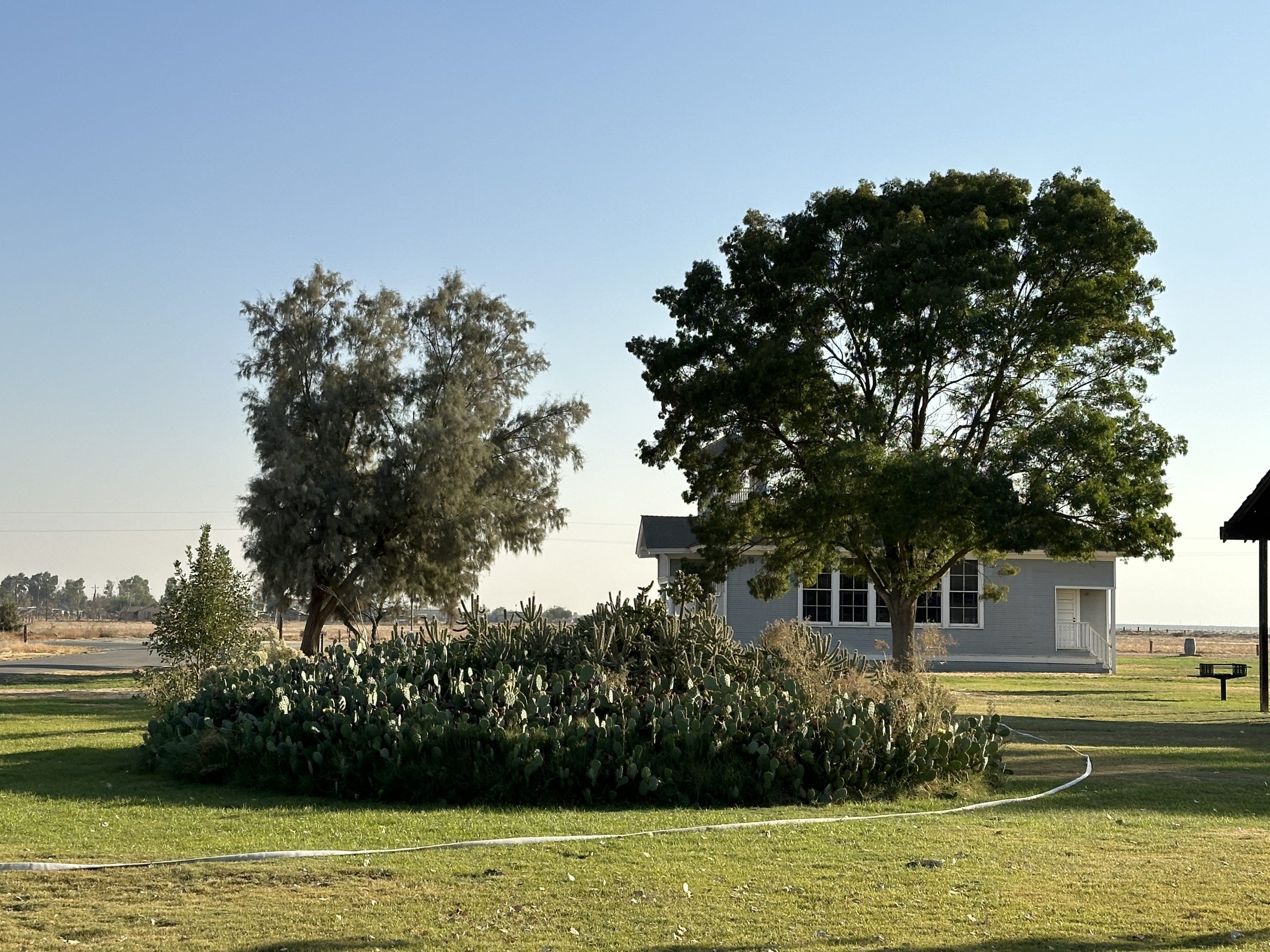
Tents, truck campers, campervans, trailers, and RVs up to 25 ft. are welcome. There are two 2 RV slots with hook ups and showers are available. Dogs are allowed but must be leashed.
WEATHER: Anticipate highs in the 80s and lows in the 60. Weather conditions may be rainy, cloudy, or sunny. Volunteers are responsible for checking weather conditions before their session begins and packing appropriately.
ABOUT VOLUNTEERING: HistoriCorps projects are free for volunteers! HistoriCorps will provide all meals, tools, training, equipment, and a campsite. Volunteers are responsible for their own transportation to the campsite, sleeping equipment, work gloves, clothes and boots, and other personal gear.
Scope of Work
SCOPE OF WORK DIFFICULTY: 
HistoriCorps is committed to educating and training volunteers in preservation skills, with an overarching mission of inspiring a preservation ethic in all those involved. Learning and working alongside expert HistoriCorps field staff and other volunteers while applying the traditional skills necessary to restore the Allensworth Schoolhouse, you will assist to:
- Prepare the site for upcoming preservation work
- Refresh the Schoolhouse exterior by priming and painting all surfaces
- Revitalize twenty-one wooden double-hung windows through repair of sash and window components, in addition to re-glazing and repainting each window
- Other preservation tasks as determined with California State Parks staff
Please note: Tasks vary by day and by week, depending on a variety of factors including: weather, project priorities, previous groups’ work, and more. Though it is likely you will get to learn and practice most or all of the above tasks, it is not guaranteed. The higher percentage of the scope a particular task is, the more likely you will get to practice it.
Sign Up!
We’re thrilled this project has inspired you to volunteer!
CLICK HERE TO REGISTER!
Visit our Job Calendar to see how many spaces are available!
*All registrations submitted to projects at capacity will be automatically added to our waitlist.*
CANCELLATIONS effect our ability to complete projects. Please register only if you are certain about your ability to participate.
You will know your registration was successful when you receive a confirmation email. Contact volunteer@historicorps.org for assistance.
HistoriCorps does not charge for its volunteering projects. HistoriCorps relies on donations to continue engaging volunteers to save significant historical sites across America for generations to come. Your donation of any amount will make an incredible difference! Increase your impact – make a generous gift today.
Volunteer Logistics, Policies, and Advice
We’re so glad you’re interested in joining this project! If you’re new to our community, review the Volunteer FAQ first! Please note the following logistics and policies:
- Volunteering with HistoriCorps is free! We will provide all meals, tools, training, equipment, and a campsite or shared indoor lodging. Dinner is not provided on the first night.
- Volunteers are responsible for bringing their own gear, work gloves, sturdy work clothes and boots, and appropriate sleeping equipment. Check the average temperatures before you start packing – the nights and mornings may be colder than you anticipate! Then, read this advice about how to stay warm when tent camping in colder places.
- Campsite accessibility varies by project. Some projects can accommodate tents only; others can accommodate small RVs. Please review the project site description above for more information, and if you’re still not sure, email volunteer@historicorps.org for help.
- If this project does not offer showers, you might want to consider bringing a solar shower or research other methods to clean up after the work day.
- Volunteer crew sizes generally range from 4-8 volunteers, with two HistoriCorps staff that lead and train volunteers in the work.
- Safety is one of HistoriCorps’ top priorities, and volunteers can contribute to a safe working environment by ensuring their physical fitness is adequate for the work. See above for this project’s scope of work and difficulty level. Please, call us if you are not quite sure if a project is a good fit for your skills or fitness level. We may be able to suggest a project more suitable and enjoyable for you.
- Hard hats, eye protection, ear protection, gloves are standard personal protection equipment (PPE) required on all projects. Hard hats must be worn at all times on the project site, unless working in a designated safe space. Field staff will train volunteers on correct use of PPE.
- Dogs are generally allowed to accompany their humans in project campsites (actually, we love having dogs join us around the campfire!). Dogs are not permitted on the job site for everyone's safety. HOWEVER: HistoriCorps also follows the rules and regulations of our project partner. If the project partner does not permit dogs onsite then HistoriCorps is no exception. Please ask HistoriCorps or the project partner directly if you have any questions about whether Fido is welcome.