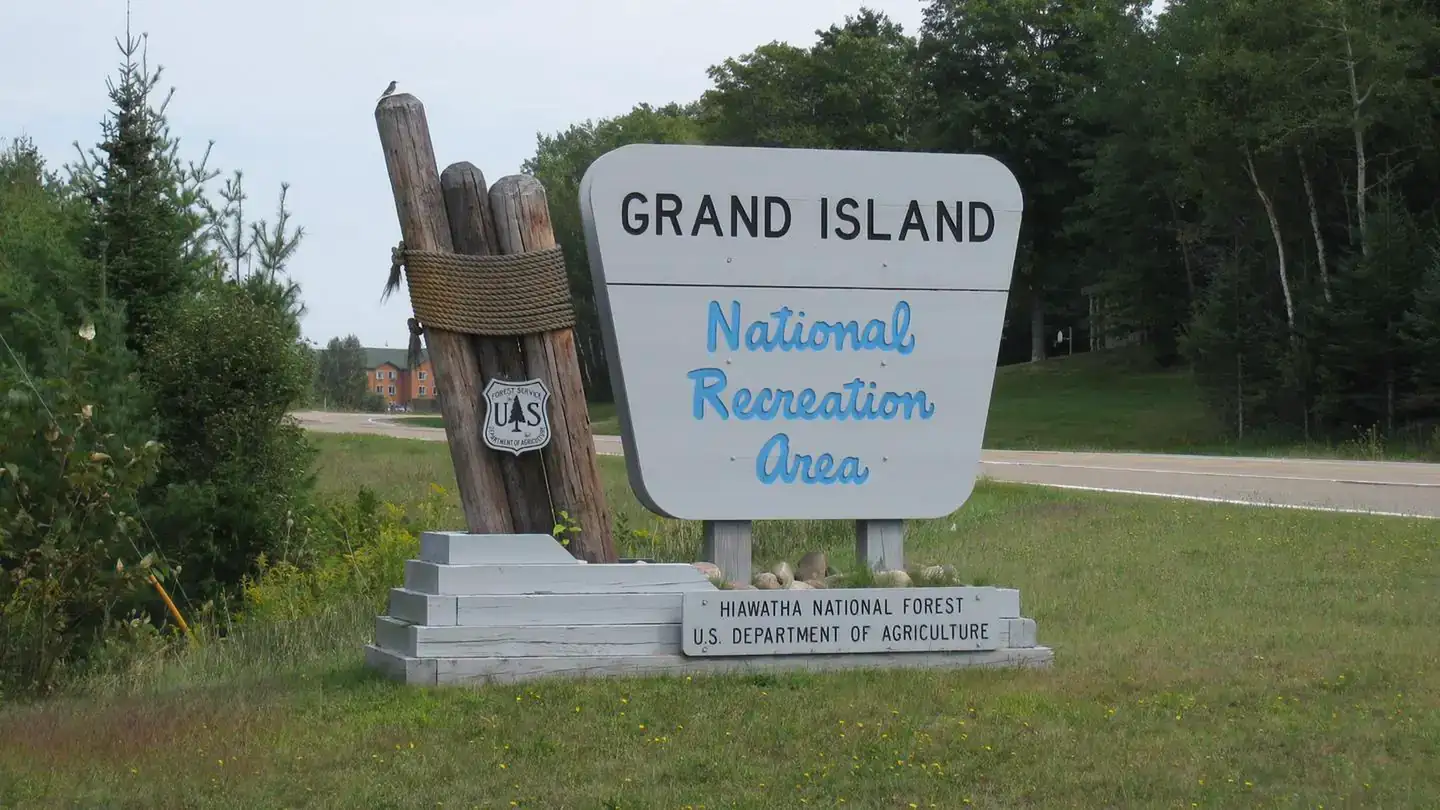
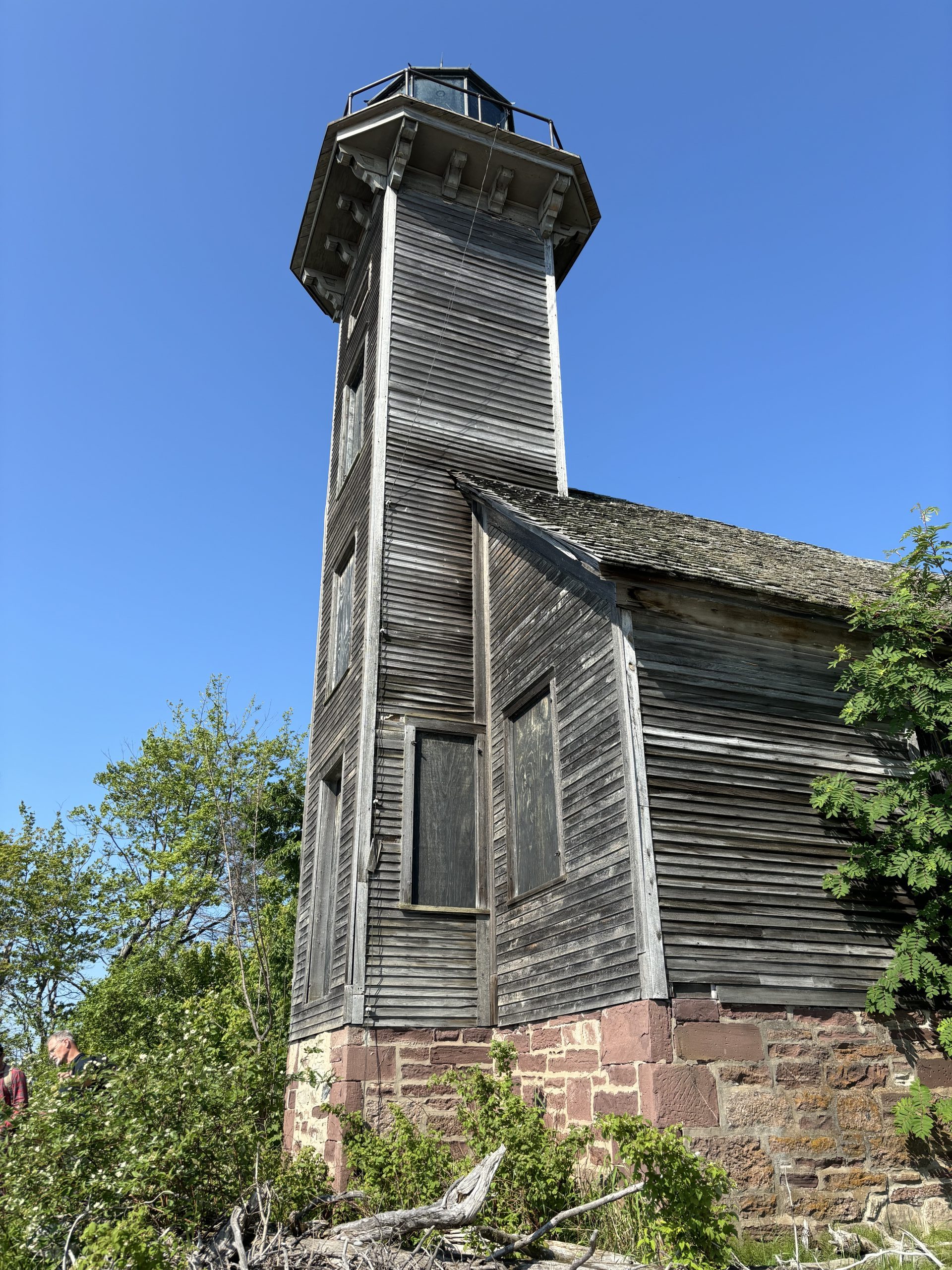
East Channel Lighthouse, MI 2026
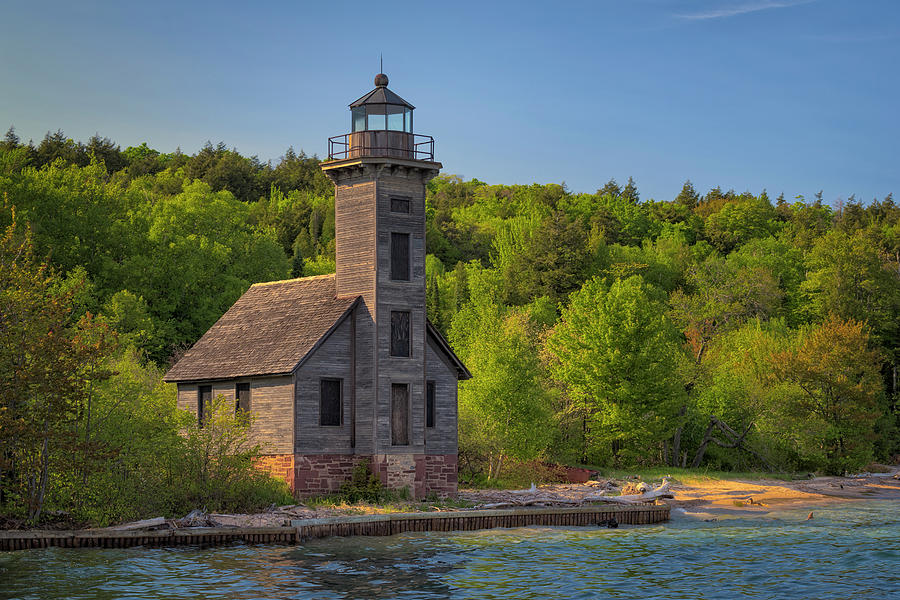
We’re setting sail for the Grand Island National Recreation Area and we want you to join us!
PROJECT PARTNER: Hiawatha National Forest
SESSION DATES: September 6-11, September 13-18, and September 20-25
CAPACITY PER SESSION: 6 Volunteers (No Kitchen Helper)
PROJECT SUPERVISOR: Reid Saunders!
ASSISTANT PROJECT SUPERVISOR: Phillip Enright and Colby Baker-Thayer!
CREW LEADER: Emily Dietrich!
Project Site Description & History
We’re heading to the banks of Lake Superior for a HistoriCorps volunteer experience unlike one we’ve had in years. This season, we’re going back to the Hiawatha National Forest for a splash of preservation excitement!
From June 1864 to June 1866, Congress appropriated money to build beacon lights at the entrance to Grand Island Bay and Harbor, Lake Superior. A light or set of lights was needed to allow vessels to use Munising Harbor as a major harbor of refuge and from this need arose the Grand Island East Channel Lighthouse. This structure is a unique wooden lighthouse that stands tall and proud on the banks of Lake Superior and was constructed to direct boats from Lake Superior through the channel east of Grand Island into the Munising Harbor.
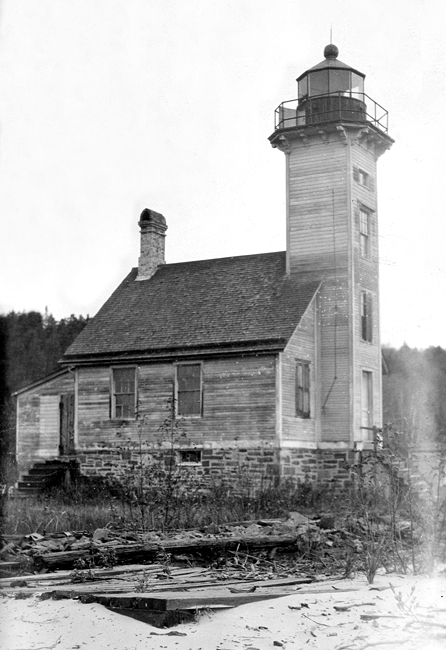
From 1868 to 1870, the Lighthouse Board raised funds to build the East Channel Light and a pair of range lights on shore. The lighthouse, a wood framed keeper’s house with an attached square wooden tower operated until 1913 until being replaced by a Munising navigation guide in 1908. A man named George Prior worked as the keeper of the lighthouse and was likely one of the last people to serve in this role.
After many years of life as a beacon, the lighthouse eventually fell into disrepair. Neglect gave way to the lighthouse, and the building was in danger of washing away due to erosion. A group of private citizens worked to restore the stone foundation and reinforce the wooden structure, raising the funds necessary for the project and coordinating the initiative. This initial round of preservation work happened in the early 2000’s, with groups such as Northern Michigan University (Marquette) students participating in the restoration. Almost 22 years later, HistoriCorps is headed to Munising to continue work on this beloved community lighthouse. If you want to set sail with us this fall, register today!
Location and Logistics
SESSION DATES: September 6-11, September 13-18, and September 20-25
Please plan to arrive at the campsite no earlier than 5pm and no later than 7pm on the first day of your session.
LOCATION: Located about 10 minutes from Munising, Michigan!
MAP to the EAST CHANNEL LIGHTHOUSE
ACCESS: 



Only tent camping can be accommodated at this location and volunteers will be required to coordinate with field staff to access site by boat – details will be included closer to the project date. Unfortunately dogs are not allowed at this site.
WEATHER: Anticipate highs potentially in the upper 70s and lows in the 50s. Weather conditions may be rainy, cloudy, or sunny. Volunteers are responsible for checking weather conditions before their session begins and packing appropriately.
ABOUT VOLUNTEERING: HistoriCorps projects are free for volunteers! HistoriCorps will provide all meals, tools, training, equipment, and a campsite. Volunteers are responsible for their own transportation to the campsite, sleeping equipment, work gloves, clothes and boots, and other personal gear.
Scope of Work
SCOPE OF WORK DIFFICULTY: 
HistoriCorps is committed to educating and training volunteers in preservation skills, with an overarching mission of inspiring a preservation ethic in all those involved. Learning and working alongside expert HistoriCorps field staff and other volunteers while applying the traditional skills necessary to restore the East Channel Lighthouse, you will assist to:
- Conduct masonry tasks and execute stone rebuild as needed.
- Rehabilitate wood sash windows and screens for all elevations to enhance the building’s facade.
- Revitalize the lighthouse interior by removing failing paint and paper from the upstairs walls.
- Repair damaged or missing upstairs plaster as needed.
- Prime and paint upstairs walls.
Please note: Tasks vary by day and by week, depending on a variety of factors including: weather, project priorities, previous groups’ work, and more. Though it is likely you will get to learn and practice most or all of the above tasks, it is not guaranteed. The higher percentage of the scope a particular task is, the more likely you will get to practice it.
Sign Up!
We’re thrilled this project has inspired you to volunteer!
CLICK HERE TO REGISTER!
Visit our Job Calendar to see how many spaces are available!
*All registrations submitted to projects at capacity will be automatically added to our waitlist.*
CANCELLATIONS effect our ability to complete projects. Please register only if you are certain about your ability to participate.
You will know your registration was successful when you receive a confirmation email. Contact volunteer@historicorps.org for assistance.
HistoriCorps does not charge for its volunteering projects. HistoriCorps relies on donations to continue engaging volunteers to save significant historical sites across America for generations to come. Your donation of any amount will make an incredible difference! Increase your impact – make a generous gift today.
Volunteer Logistics, Policies, and Advice
We’re so glad you’re interested in joining this project! If you’re new to our community, review the Volunteer FAQ first! Please note the following logistics and policies:
- Volunteering with HistoriCorps is free! We will provide all meals, tools, training, equipment, and a campsite or shared indoor lodging. Dinner is not provided on the first night.
- Volunteers are responsible for bringing their own gear, work gloves, sturdy work clothes and boots, and appropriate sleeping equipment. Check the average temperatures before you start packing – the nights and mornings may be colder than you anticipate! Then, read this advice about how to stay warm when tent camping in colder places.
- Campsite accessibility varies by project. Some projects can accommodate tents only; others can accommodate small RVs. Please review the project site description above for more information, and if you’re still not sure, email volunteer@historicorps.org for help.
- If this project does not offer showers, you might want to consider bringing a solar shower or research other methods to clean up after the work day.
- Volunteer crew sizes generally range from 4-8 volunteers, with two HistoriCorps staff that lead and train volunteers in the work.
- Safety is one of HistoriCorps’ top priorities, and volunteers can contribute to a safe working environment by ensuring their physical fitness is adequate for the work. See above for this project’s scope of work and difficulty level. Please, call us if you are not quite sure if a project is a good fit for your skills or fitness level. We may be able to suggest a project more suitable and enjoyable for you.
- Hard hats, eye protection, ear protection, gloves are standard personal protection equipment (PPE) required on all projects. Hard hats must be worn at all times on the project site, unless working in a designated safe space. Field staff will train volunteers on correct use of PPE.
- Dogs are generally allowed to accompany their humans in project campsites (actually, we love having dogs join us around the campfire!). Dogs are not permitted on the job site for everyone's safety. HOWEVER: HistoriCorps also follows the rules and regulations of our project partner. If the project partner does not permit dogs onsite then HistoriCorps is no exception. Please ask HistoriCorps or the project partner directly if you have any questions about whether Fido is welcome.