
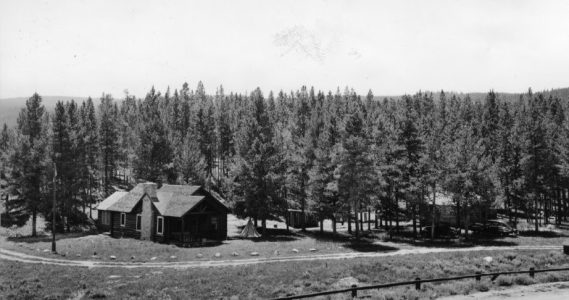
Stubs Ranger Station, CO 2026

Join us this June at the Stubs Ranger Station where we’ll preserve a hidden gem of the Arapaho and Roosevelt National Forests!
PROJECT PARTNER: Arapaho and Roosevelt National Forests & Pawnee National Grassland
SESSION DATES: May 31- June 5, June 7-12, June 14-19, and June 22-27
PROJECT SUPERVISOR: David Russell!
ASSISTANT PROJECT SUPERVISOR: Jack Spano!
CREW LEADER: Assignment in progress!
Project Site Description & History
The Stubs Ranger Station (also known as the Stub Creek Cabin or Stub Creek Work Center) is part of the Stub Creek Administrative Site, which is a complex is located on the north end of the Laramie River Valley in the Arapaho and Roosevelt National Forests & Pawnee National Grassland. The Stubs Ranger Station served as a ranger station prior to the Civilian Conservation Corps presence in the area, and a ranger named Bruce Torgny administered the Laramie River subdistrict from this building. The origins of this initial station are not known, though historic photographs suggest the existence of a log barn and fence located on-site.
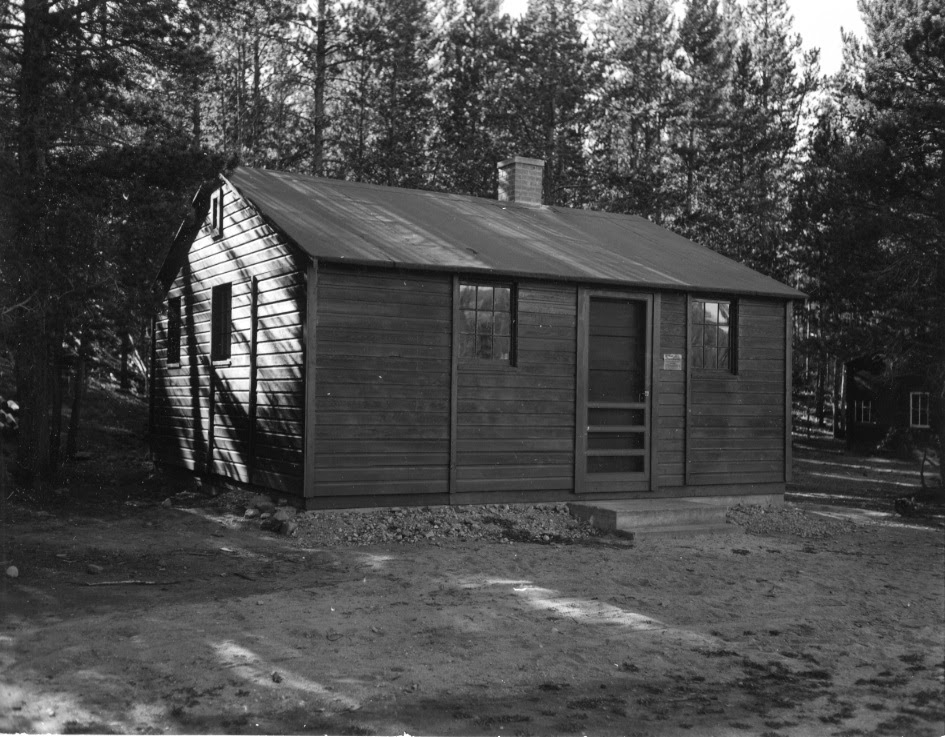
In 1934, the CCC Camp F-50-C Redfeather established a side camp at this location called the Stub Creek Side Camp. Civilian Conservation Corps side camps were smaller camps, made up of just a few men working on projects separate from the main camp. Historic records suggest the existence of an original Stub Creek Ranger Station that was town down, with new construction beginning in 1935. The historic cabin was built by the Civilian Conservation Corps and completed in 1936, and the building was used to administer the original Roosevelt National Forest prior to the Depression.
The cabin is representative of a CCC-Era Ranger Station and is an extant example of the first formal use of hewn face-logs used in Region 2 (which eventually became part of the Rustic Style of design standard to the area). One notable detail about the structure’s design was the inclusion of a concave trough hewed into the lower edge of each log. This space was later filled with oakum, which allowed logs to fit tightly together thus requiring no chinking or daubing. At one point, the building served as lodging for the district ranger’s family and Forest Service employees.
The Stubs Ranger Station is considered significant under Criterion A and Criterion C of the criteria used to evaluate properties for the National Register of Historic Places. Criterion A focuses on buildings, properties, and structures “that are associated with events that have made a significant contribution to the broad patterns of our history”, while Criterion C centers on buildings, properties, and structures “that embody the distinctive characteristics of a type, period, or method of construction, or that represent the work of a master, or that possess high artistic values, or that represent a significant and distinguishable entity whose components may lack individual distinction”.
According to Recreation.gov, Stub Creek passes nearby and is a short walk from the cabin. The facility is fully furnished and equipped with modern amenities including indoor plumbing, electricity, a fireplace, and a complete kitchen with stove, oven, refrigerator, microwave, and all necessary cooking utensils and dishes. Two bedrooms each contain two single beds with mattresses, and a futon couch in the living room provides additional sleeping space for up to five guests total. The surrounding area offers abundant recreational opportunities including hiking, horseback riding, backpacking, mountain biking, hunting, and fishing. The cabin sits in an open area at 8,400 feet elevation, surrounded by spruce, fir, and lodgepole pine trees. Off-highway vehicles are permitted on nearby designated roads, though not on-site. Wildlife viewing is excellent, with moose, deer, elk, bear, and numerous bird species inhabiting the area. The cabin is accessible by vehicle year-round, though it operates seasonally.



Location and Logistics
SESSION DATES: May 31- June 5, June 7-12, June 14-19, and June 22-27
Please plan to arrive at the campsite no earlier than 5pm and no later than 7pm on the first day of your session.
LOCATION: Located about 55 miles southwest of the Laramie, WY!
MAP to the STUBS RANGER STATION
ACCESS: 





Tents, car campers, truck campers, campervans, trailers, and RVs 35′ feet and under are welcome (though hookups are not available). Dogs are welcome but must be leashed.
WEATHER: Anticipate highs potentially in the 60s and lows in the 30s. Weather conditions may be rainy, cloudy, or sunny. Volunteers are responsible for checking weather conditions before their session begins, and packing appropriately.
ABOUT VOLUNTEERING: HistoriCorps projects are free for volunteers! HistoriCorps will provide all meals, tools, training, equipment, and a campsite. Volunteers are responsible for their own transportation to the campsite, sleeping equipment, work gloves, clothes and boots, and other personal gear.
Scope of Work
SCOPE OF WORK DIFFICULTY: 
HistoriCorps is committed to educating and training volunteers in preservation skills, with an overarching mission of inspiring a preservation ethic in all those involved. Learning and working alongside expert HistoriCorps field staff and other volunteers while applying the traditional skills necessary to restore the Stubs Ranger Station, you will assist to:
- Rehabilitate the main roof through cedar shingle replacement to maintain historic integrity of the Ranger Station.
- Repair and replace deteriorated wood elements to enhance the exterior of the Ranger Station.
- If time allows: Rehabilitate the structure’s historic windows and other preservation tasks as determined with Arapaho and Roosevelt National Forests & Pawnee National Grassland staff.
Please note: Tasks vary by day and by week, depending on a variety of factors including: weather, project priorities, previous groups’ work, and more. Though it is likely you will get to learn and practice most or all of the above tasks, it is not guaranteed. The higher percentage of the scope a particular task is, the more likely you will get to practice it.
Sign Up!
We’re thrilled this project has inspired you to volunteer!
CLICK HERE TO REGISTER!
(Currently only available for HistoriClub Members – Open Registration will be available Monday, March 16th at 12:00pm MST!)
Visit our Job Calendar to see how many spaces are available!
*All registrations submitted to projects at capacity will be automatically added to our waitlist.*
CANCELLATIONS effect our ability to complete projects. Please register only if you are certain about your ability to participate.
You will know your registration was successful when you receive a confirmation email. Contact volunteer@historicorps.org for assistance.
HistoriCorps does not charge for its volunteering projects. HistoriCorps relies on donations to continue engaging volunteers to save significant historical sites across America for generations to come. Your donation of any amount will make an incredible difference! Increase your impact – make a generous gift today.
Volunteer Logistics, Policies, and Advice
We’re so glad you’re interested in joining this project! If you’re new to our community, review the Volunteer FAQ first! Please note the following logistics and policies:
- Volunteering with HistoriCorps is free! We will provide all meals, tools, training, equipment, and a campsite or shared indoor lodging. Dinner is not provided on the first night.
- Volunteers are responsible for bringing their own gear, work gloves, sturdy work clothes and boots, and appropriate sleeping equipment. Check the average temperatures before you start packing – the nights and mornings may be colder than you anticipate! Then, read this advice about how to stay warm when tent camping in colder places.
- Campsite accessibility varies by project. Some projects can accommodate tents only; others can accommodate small RVs. Please review the project site description above for more information, and if you’re still not sure, email volunteer@historicorps.org for help.
- If this project does not offer showers, you might want to consider bringing a solar shower or research other methods to clean up after the work day.
- Volunteer crew sizes generally range from 4-8 volunteers, with two HistoriCorps staff that lead and train volunteers in the work.
- Safety is one of HistoriCorps’ top priorities, and volunteers can contribute to a safe working environment by ensuring their physical fitness is adequate for the work. See above for this project’s scope of work and difficulty level. Please, call us if you are not quite sure if a project is a good fit for your skills or fitness level. We may be able to suggest a project more suitable and enjoyable for you.
- Hard hats, eye protection, ear protection, gloves are standard personal protection equipment (PPE) required on all projects. Hard hats must be worn at all times on the project site, unless working in a designated safe space. Field staff will train volunteers on correct use of PPE.
- Dogs are generally allowed to accompany their humans in project campsites (actually, we love having dogs join us around the campfire!). Dogs are not permitted on the job site for everyone's safety. HOWEVER: HistoriCorps also follows the rules and regulations of our project partner. If the project partner does not permit dogs onsite then HistoriCorps is no exception. Please ask HistoriCorps or the project partner directly if you have any questions about whether Fido is welcome.