Preserving Section 106
An Educational Series
Published October 22, 2026
Part 3 – What’s Changing?
As we discussed in the last segment of our Section 106 educational series: for 60 years, the National Historic Preservation Act has helped ensure that historic places are considered when federal agencies make decisions affecting our nation’s built and cultural heritage. At the heart of this framework is Section 106, a review process that brings federal agencies, Tribal Nations, preservation professionals, and communities together to consider how proposed projects may affect historic properties.
According to the National Trust for Historic Preservation, “Section 106 of the National Historic Preservation Act of 1966 requires that “federal agencies take into account the effects of their actions on historic properties and places, enabling public participation and comment in the process, empowering state and local governments and Tribal communities to have a voice in the process, and often improving the project and enhancing the outcome.” [1],[2]
[1] National Historic Preservation Act of 1966, Pub. L. No. 89-665, 80 Stat. 915 (October 15, 1966).
[2] Paul Rudolph Institute for Modern Architecture, “Section 106 Under Threat: What It Is, Why It Matters and What to Do About It”, August 1 2026, Section 106 Under Threat: What it is, why it matters and what to do about it — Paul Rudolph Institute for Modern Architecture.
Now, significant changes to that process are being proposed.
On Friday, July 24th July 2026, the Advisory Council on Historic Preservation (ACHP) voted to advance proposed revisions to the federal regulations that govern Section 106. The stated direction of the effort is to streamline federal review and improve efficiency in project delivery.[3]
[3] https://www.achp.gov/news/achp-votes-move-forward-notice-proposed-rulemaking
While the National Historic Preservation Act itself would remain in place, the proposed revisions could substantially fundamentally alter how Section 106 requirements are implemented.
 What exactly is being proposed?
1. Fewer projects could undergo historic preservation review.
The proposal would narrow which federally connected activities trigger Section 106 review and expand opportunities to exempt certain projects from the process.
Why does this matter? If a project does not undergo review, historic properties that might be affected may never be identified or evaluated before work begins.
2. Federal agencies could have greater oversight over preservation decisions.
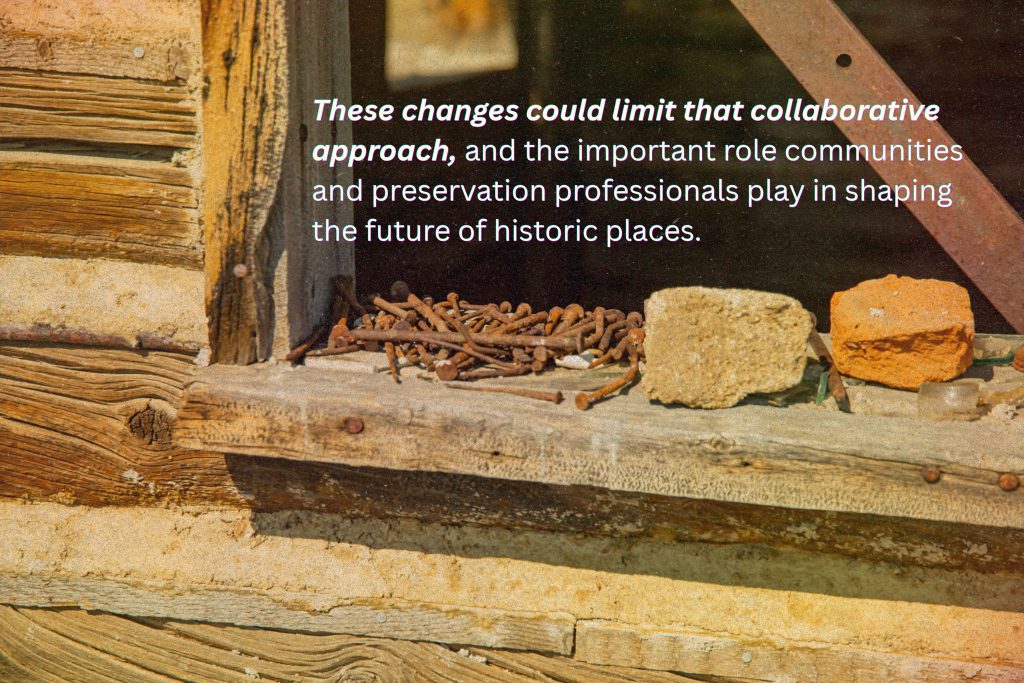
Currently, Section 106 emphasizes consultation among federal agencies, State and Tribal Historic Preservation Offices, Tribal Nations, and other consulting parties. The proposed revisions would give federal agencies greater control over identifying historic properties, evaluating impacts, establishing review timelines, and determining how adverse effects will be addressed. Section 106 has long emphasized collaboration, bringing different perspectives and expertise together to help inform decisions about our shared heritage. These changes could limit that collaborative approach, and the important role communities and preservation professionals play in shaping the future of historic places.
This could reduce opportunities for outside preservation expertise, community perspectives, and site significance to influence decisions as they develop.
3. The types of impacts considered could be narrowed.
Historic preservation is about more than the physical walls of a building. A property’s historic setting, surrounding landscape, and relationship to its environment are essential to understanding its significance.
The proposal would narrow how certain indirect effects and changes to historic settings are considered. This could affect cultural landscapes, places of religious and cultural significance to Tribal Nations, and historic properties whose significance extends beyond their physical structures.
4. Public participation could become more limited.
Section 106 provides opportunities for communities and interested individuals to contribute information perspectives and lived experiences about historic places. Under the proposed revisions, federal agencies would have greater discretion over when and how the public participates.
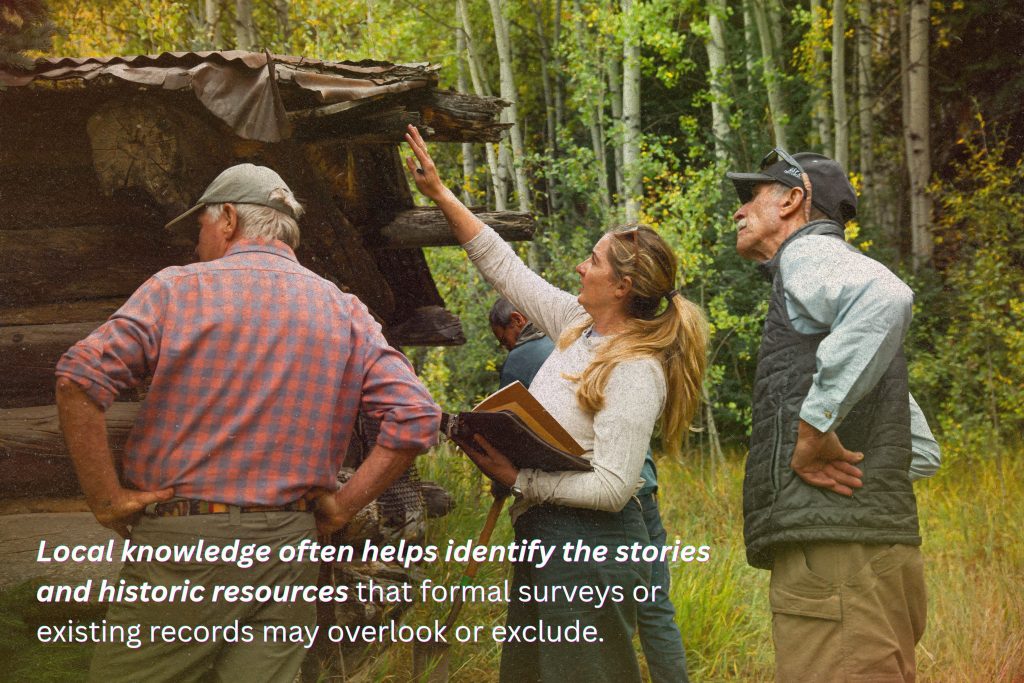
This is particularly significant because local knowledge often helps identify the stories and historic resources that formal surveys or existing records may overlook or exclude.
What does this mean for historic preservation?
Supporters of regulatory streamlining emphasize the importance of reducing delays and improving efficiency in federal project delivery. Preservation organizations and Tribal representatives have raised concerns that the proposed changes could reduce meaningful consultation, narrow the consideration of historic properties, and give federal agencies greater discretion over preservation outcomes.
These changes have not been finalized. The proposal is moving through the federal rulemaking process, which provides opportunities for further review and potential revisions.
At HistoriCorps, we understand that preserving historic places requires both intentional planning and hands-on stewardship. The structures our volunteers help rehabilitate are often modest, but the histories they represent are anything but.
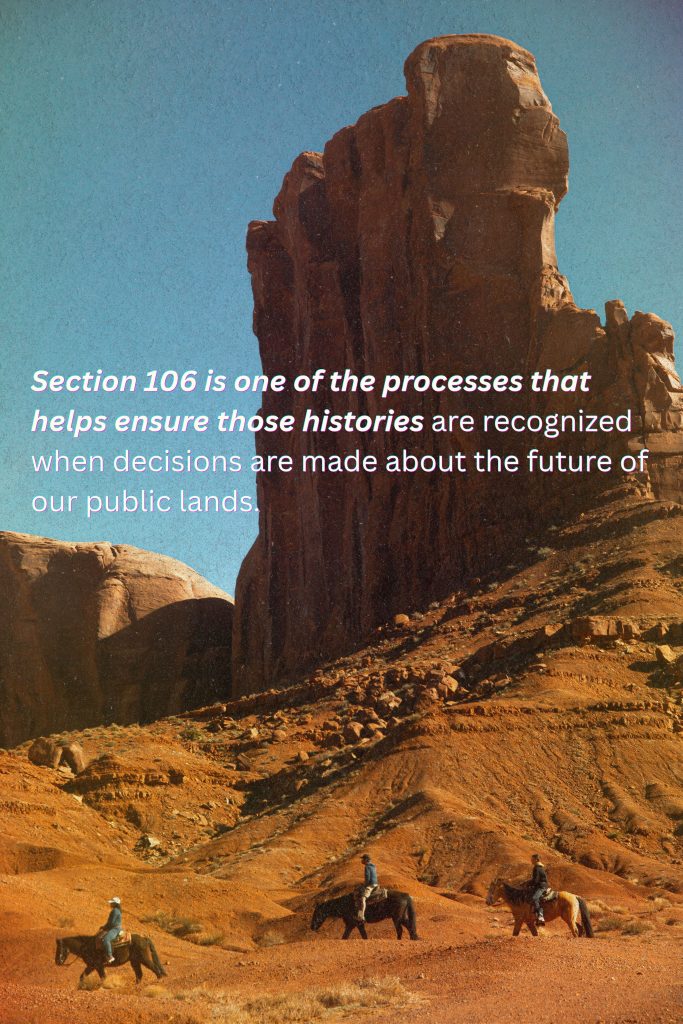
Section 106 is one of the processes that helps ensure those histories are recognized when decisions are made about the future of our public lands.