Cement Ridge Fire Lookout, WY 2026
We’re heading back to the Black Hills National Forest for another classic fire lookout volunteer opportunity!
PROJECT PARTNER: Black Hills National Forest
SESSION DATES: August 9-14
CAPACITY PER SESSION: 7 Volunteers + 1 Kitchen Helper
PROJECT SUPERVISORS: Matt Entwistle!
ASSISTANT PROJECT SUPERVISORS: Jack Spano!
CREW LEADERS: Carl Clark!
Project Site Description & History
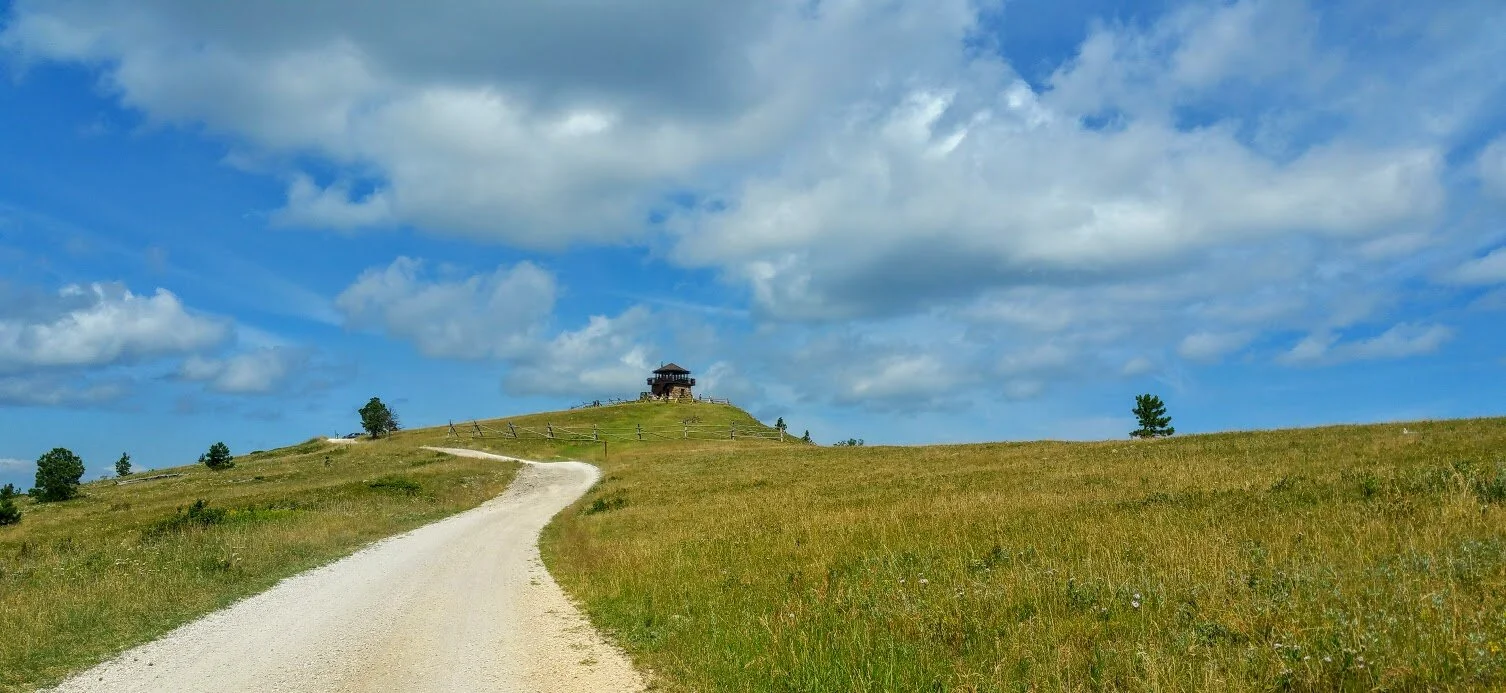
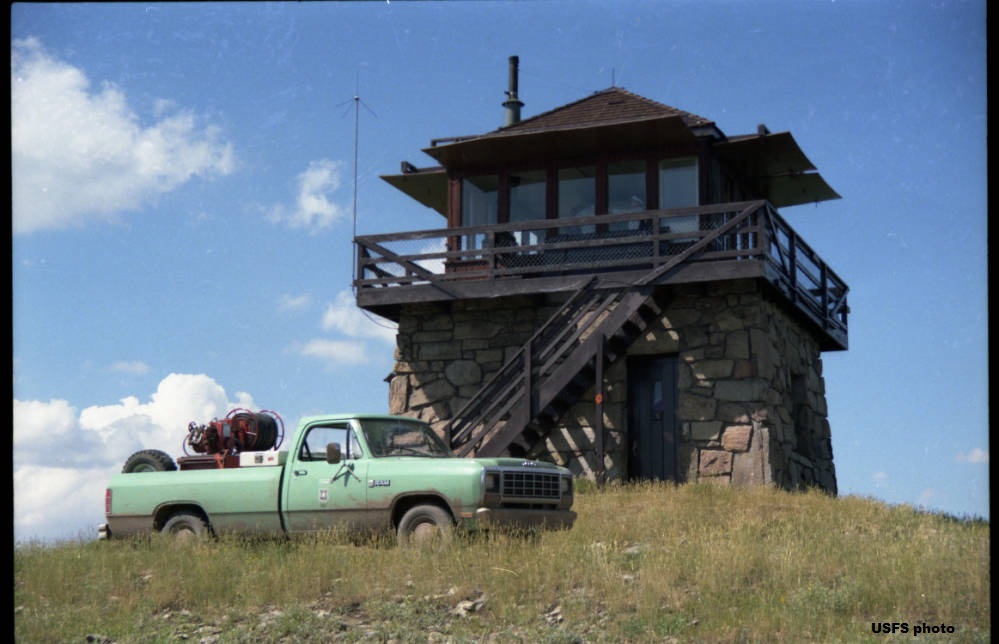
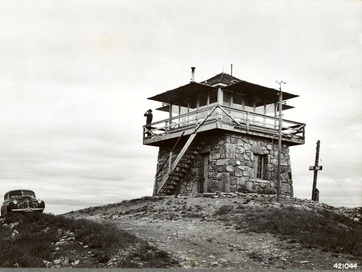
Rising atop the crest of the Cement Ridge sits the resplendent Cement Ridge Fire Lookout. Located in Crook County, Wyoming at an elevation of 6,647 ft., the Cement Ridge Lookout is a fire lookout structure that was constructed by the Civilian Conservation Corps in 1941. Shaped by years of change, the Cement Ridge Fire Lookout remains a defining symbol of our nation’s fire management infrastructure and a beloved vantage point for sweeping views.
The Black Hills of South Dakota are a territory known for not only their historical significance and ties to the past, but also the unique environmental and geological features present in the area that make the landscape a pride of the Great Plains. The Black Hills of South Dakota and Wyoming have long been held sacred by the indigenous people of the area. Derived from the Lakota language, the words “Paha Sapa,” meaning “hills that are black,” honor the dark, pine-covered hills rising several thousand feet above the surrounding prairie.
In 1868, the United States government pledged that the Black Hills area would be “set apart for the absolute and undisturbed use and occupation” of the Sioux people, as part of the Great Sioux Reservation. However, after gold was discovered in the area in 1874, the United States confiscated the land and threatened inhabitants with starvation. The ownership and legacy of the Black Hills is still of great national importance, and is the subject of important activism. Derived in 1897 as the Black Hills Forest Reserve, the now Black Hills National Forest was created as one of the preliminary preservation areas in the United States, after increased forest fires lead to legislation of the Timber Culture Act and Forest Reserve Act of 1891.
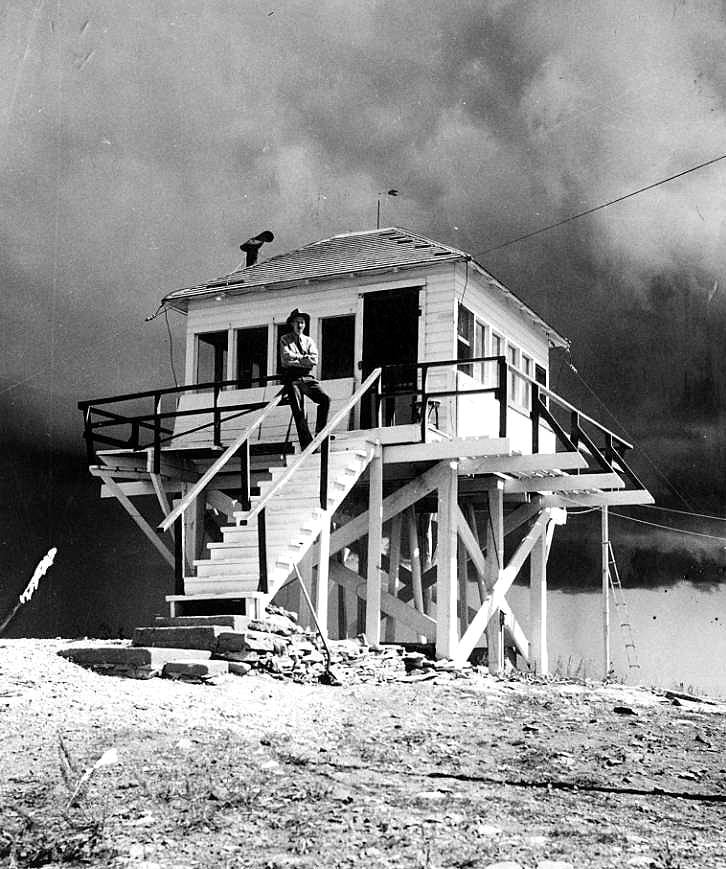
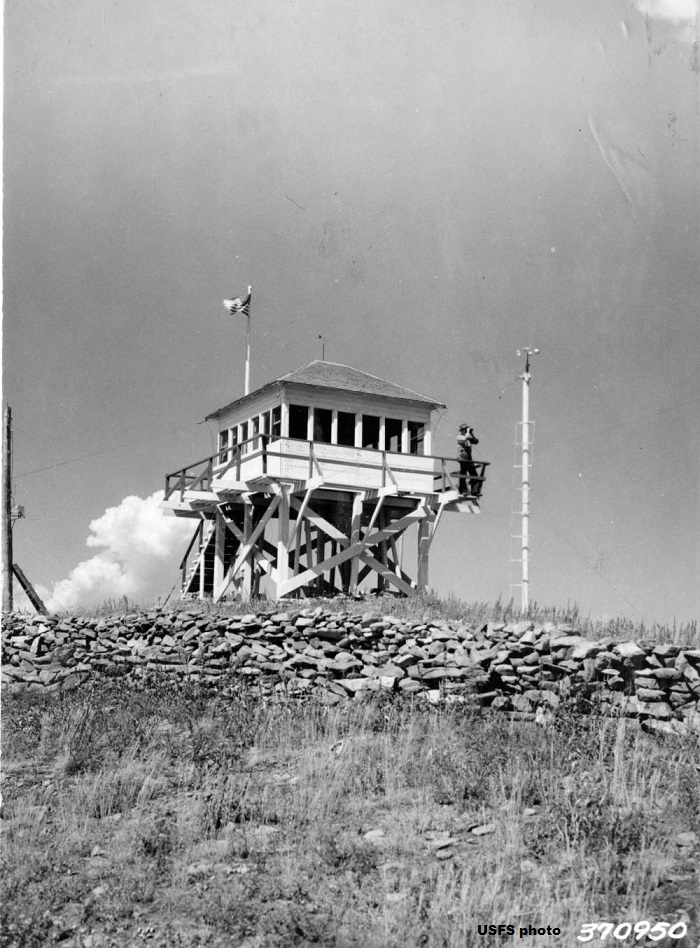
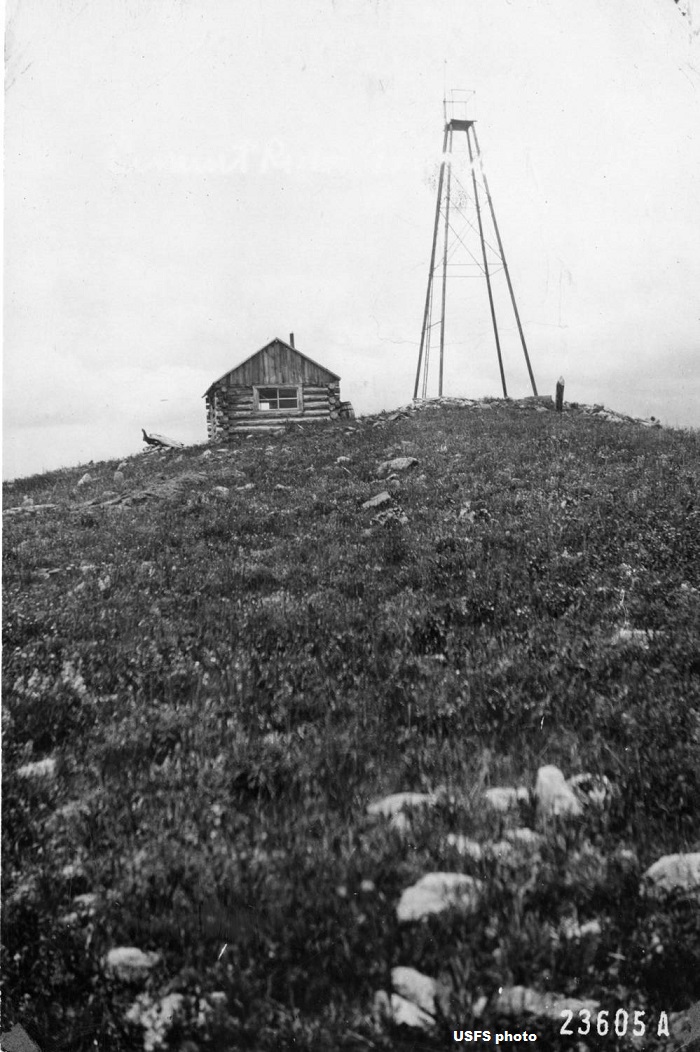
The Cement Ridge Fire Lookout has evolved through multiple iterations. The lookout itself was initially conceptualized as a log cabin and was built between 1911 and 1913. In 1921, a crow’s nest with a glassed-in house was constructed near the cabin. Later in 1935, a rock cellar was built to accompany the fire lookout. The fire lookout that exists today was built between 1940 and 1941 by the Civilian Conservation Corps and replaces the earlier versions of the fire lookout tower. The design style reflects the standards of the time, embodying the characteristics of CCC-era rustic architecture.
The building was constructed using local materials and hand-crafted stonework. The stone base was built from native mortared stone, and the structure contains elements such as a wooden catwalk plank, railing, and wood-framed cab. The Cement Ridge Fire Lookout’s stone base is approximately 15 feet tall, the wooden cab is about 14 × 14 ft., and the wrap-around catwalk measures about 3 to 4 feet wide. Within the interior of the fire lookout lies a stairway that leads to the cab and a storage room. Finally, the structure is covered by a wood-framed hip roof. According to the United States Forest Service, “over the years there have been many maintenance projects conducted on the lookout. In 1974, the cab siding, some planks in the catwalk, steps and wall studs were replaced. The interior was repainted, the siding stained, and the catwalk railing and steps were painted. The ground floor window frames and door were also replaced at that time. The lookout is considered eligible for the National Register of Historic Places and was listed on the National Historic Lookout Register on December 30, 1993.”
With so much history tucked into one corner of the American West, HistoriCorps is excited to offer volunteers an opportunity to visit the Black Hills and preserve a celebrated legacy of preservation work.
Location and Logistics
SESSION DATES: August 9-14
Please plan to arrive at the campsite no earlier than 5pm and no later than 7pm on the first day of your session.
LOCATION: Located approximately 1 hour southwest of Spearfish, SD!
MAP to the CEMENT RIDGE FIRE LOOKOUT
ACCESS: 





Tents, car campers, truck campers, campervans, trailers, and a few RVs up to 35′ will have access to our campground. Unfortunately, RV hookups and showers are not available, and dogs are not allowed.
WEATHER: Anticipate highs in the 80s and lows in the 50s. Weather conditions may be rainy, cloudy, snowy, or sunny. Volunteers are responsible for checking weather conditions before their session begins, and packing appropriately.
ABOUT VOLUNTEERING: HistoriCorps projects are free for volunteers! HistoriCorps will provide all meals, tools, training, equipment, and a campsite. Volunteers are responsible for their own transportation to the campsite, sleeping equipment, work gloves, clothes and boots, and other personal gear.
Scope of Work
SCOPE OF WORK DIFFICULTY: 
HistoriCorps is committed to educating and training volunteers in preservation skills, with an overarching mission of inspiring a preservation ethic in all those involved. Learning and working alongside expert HistoriCorps field staff and other volunteers while applying the traditional skills necessary to restore the Cement Ridge Lookout, you will assist to:
The following scope of work will stabilize, repair, and rebuild in-kind the garage door and the primary entrance to restore weather protection, safe operation, and historic character while retaining as much original fabric and hardware as feasible.
- Prepare the site for upcoming preservation work.
Garage door
- Research and choose between two treatment options: stabilize and weather-tighten with door fixed closed or restore operability retrofitted with modern tilt-up canopy mechanism.
- Determine the appropriate method then proceed with the chosen treatment option.
Primary entrance door
- Repair hinge stile with epoxy or dutchman patches to ensure that the door hangs correctly.
- Plane edges to remove bind and ensure smooth operation and proper alignment.
- Install new weather-stripping and a low-profile sweep to prevent air and water infiltration.
- Replace glass and re-bed or reglaze lites to restore safety and provide a weather-tight seal.
- Service or replace the door closer to ensure a controlled closing mechanism and reliable latching.
- Strip failing finish where needed to remove compromised coating.
- Spot-prime, topcoat, and seal patches to protect exposed wood and blend repairs with the existing finish.
Please note: Tasks vary by day and by week, depending on a variety of factors including: weather, project priorities, previous groups’ work, and more. Though it is likely you will get to learn and practice most or all of the above tasks, it is not guaranteed. The higher percentage of the scope a particular task is, the more likely you will get to practice it.
Sign Up!
We’re thrilled this project has inspired you to volunteer!
CLICK HERE TO REGISTER!
(Currently only available for HistoriClub Members – Open Registration will be available Monday, April 27th at 12:00pm MST!)
Visit our Job Calendar to see how many spaces are available!
*All registrations submitted to projects at capacity will be automatically added to our waitlist.*
CANCELLATIONS effect our ability to complete projects. Please register only if you are certain about your ability to participate.
You will know your registration was successful when you receive a confirmation email. Contact volunteer@historicorps.org for assistance.
HistoriCorps does not charge for its volunteering projects. HistoriCorps relies on donations to continue engaging volunteers to save significant historical sites across America for generations to come. Your donation of any amount will make an incredible difference! Increase your impact – make a generous gift today.
Volunteer Logistics, Policies, and Advice
We’re so glad you’re interested in joining this project! If you’re new to our community, review the Volunteer FAQ first! Please note the following logistics and policies:
- Volunteering with HistoriCorps is free! We will provide all meals, tools, training, equipment, and a campsite or shared indoor lodging. Dinner is not provided on the first night.
- Volunteers are responsible for bringing their own gear, work gloves, sturdy work clothes and boots, and appropriate sleeping equipment. Check the average temperatures before you start packing – the nights and mornings may be colder than you anticipate! Then, read this advice about how to stay warm when tent camping in colder places.
- Campsite accessibility varies by project. Some projects can accommodate tents only; others can accommodate small RVs. Please review the project site description above for more information, and if you’re still not sure, email volunteer@historicorps.org for help.
- If this project does not offer showers, you might want to consider bringing a solar shower or research other methods to clean up after the work day.
- Volunteer crew sizes generally range from 4-8 volunteers, with two HistoriCorps staff that lead and train volunteers in the work.
- Safety is one of HistoriCorps’ top priorities, and volunteers can contribute to a safe working environment by ensuring their physical fitness is adequate for the work. See above for this project’s scope of work and difficulty level. Please, call us if you are not quite sure if a project is a good fit for your skills or fitness level. We may be able to suggest a project more suitable and enjoyable for you.
- Hard hats, eye protection, ear protection, gloves are standard personal protection equipment (PPE) required on all projects. Hard hats must be worn at all times on the project site, unless working in a designated safe space. Field staff will train volunteers on correct use of PPE.
- Dogs are generally allowed to accompany their humans in project campsites (actually, we love having dogs join us around the campfire!). Dogs are not permitted on the job site for everyone's safety. HOWEVER: HistoriCorps also follows the rules and regulations of our project partner. If the project partner does not permit dogs onsite then HistoriCorps is no exception. Please ask HistoriCorps or the project partner directly if you have any questions about whether Fido is welcome.