Preserving Section 106
An Educational Series
Published October 29, 2026
Part 4 – Case Studies A & B
Preservation in Action: Keeping History Alive at Devil’s Head Lookout
Historic places connect us to the past in ways that photographs and written accounts alone cannot. Their materials, craftsmanship, and physical settings provide tangible evidence of the people and events that shaped our history. But as buildings age and their needs change, how do we ensure that the work required to maintain them does not erase the very qualities that make them significant?
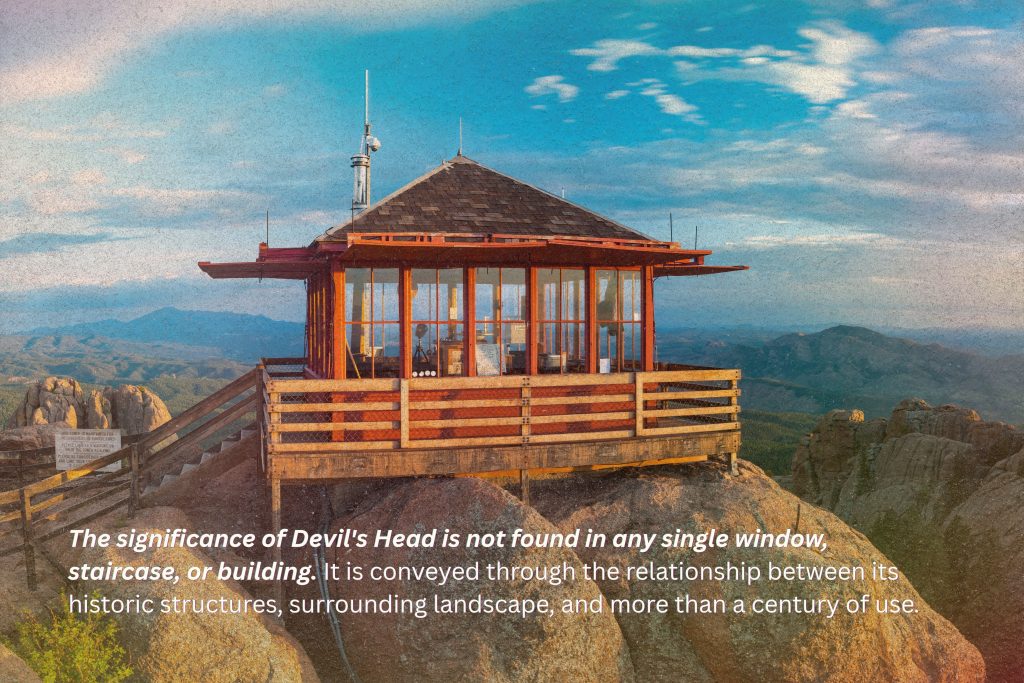
At Devil’s Head Fire Lookout in Colorado’s Pike National Forest, this balance is central to preserving more than a century of forest stewardship.
A Century of Watching Over Colorado’s Forests
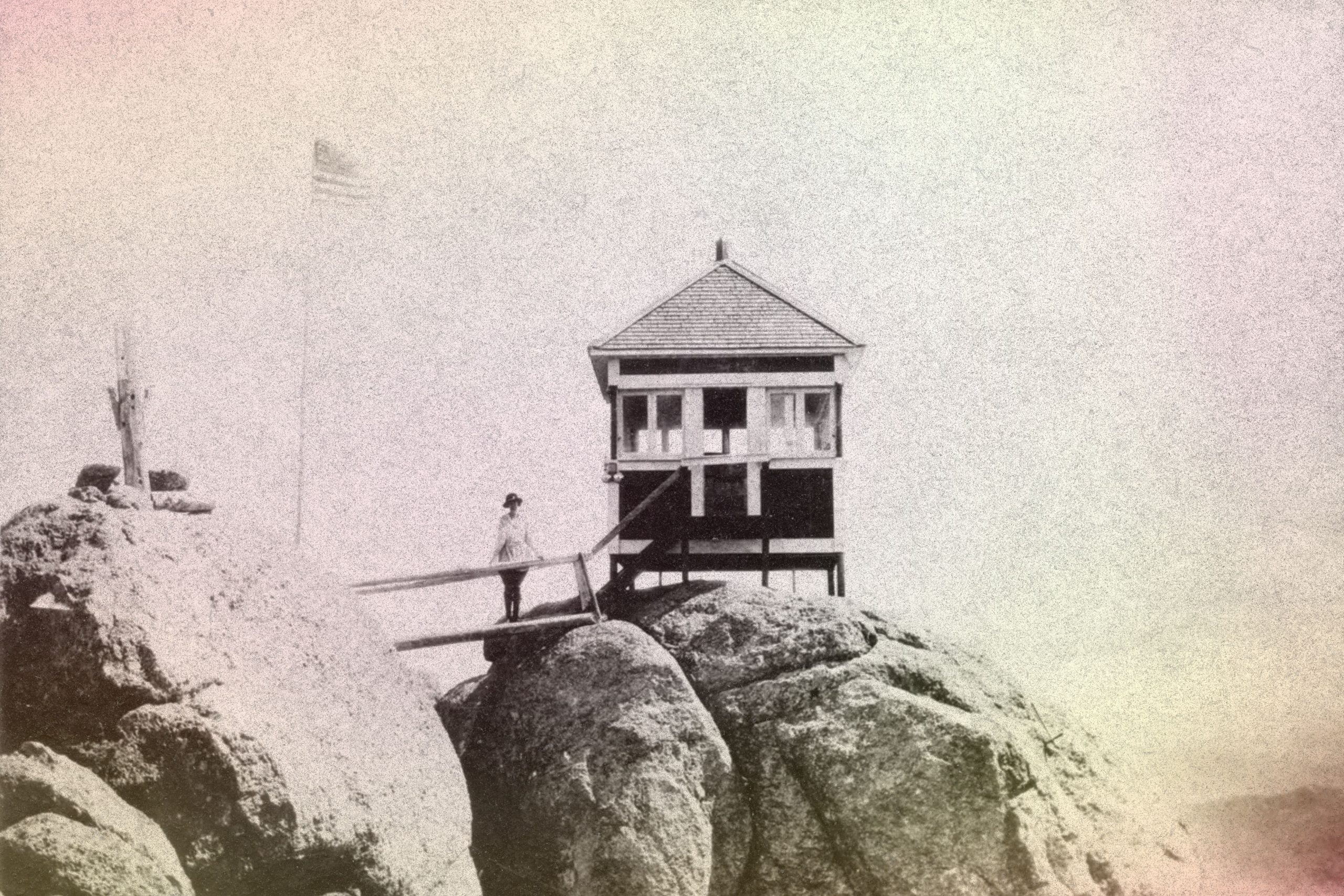
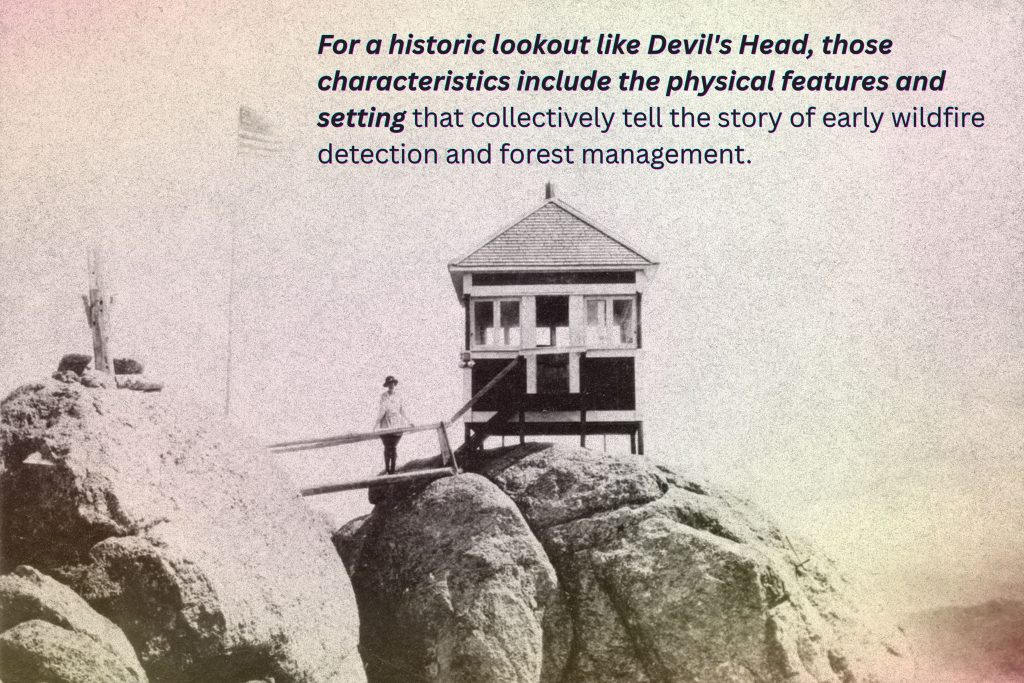
Perched atop a granite outcrop at 9,748 feet in Colorado’s Rampart Range, Devil’s Head has served as a fire lookout station since 1912. Its commanding views across Colorado’s Front Range made it an ideal location for detecting wildfires and protecting surrounding forests and communities.[1]
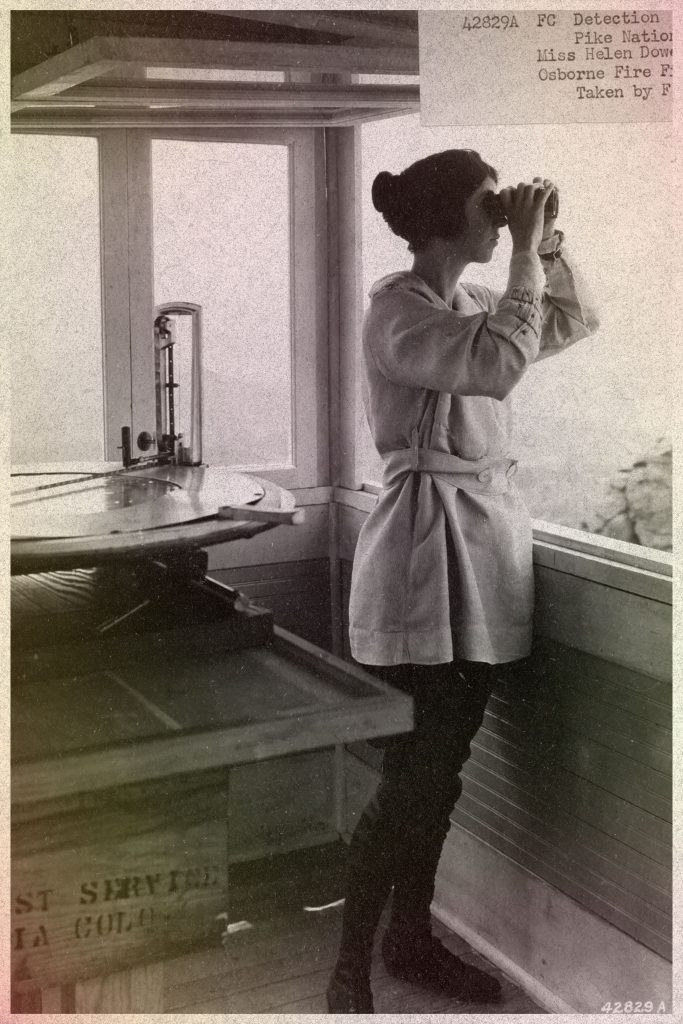 Devil’s Head also holds a remarkable place in women’s history. In 1919, Helen Dowe became the nation’s first female fire lookout, serving at the station for three seasons through 1921. Her pioneering work attracted national attention, inspiring other women to pursue similar opportunities in forestry.
As Forest Service operations evolved, so did the site. In 1951, the lookout, ranger’s cabin, and access staircase were rebuilt to support continued operations. These structures, together with the surrounding landscape and remnants of earlier development, illustrate the site’s evolution and its longstanding role in forest conservation.
Listed on the National Register of Historic Places in 2003, Devil’s Head is recognized for its significant association with early U.S. Forest Service conservation efforts.[2]
[1] Machann, Barbara, et al. “Devils Head Lookout.” National Register of Historic Places Registration Form. Sedalia, CO: Sedalia Historic Fire House Museum, May 2002. Listed 2003. National Register reference no. 03000518.
[2] Ibid.
HistoriCorps Preservation in Action
Preserving a historic structure atop a remote granite peak is no small task. It requires a careful balance between ongoing maintenance, safety, and the retention of historic character.
Beginning in 2013, HistoriCorps partnered with the U.S. Forest Service on multiple preservation projects at Devil’s Head. Early efforts addressed deteriorated woodwork, decking, railings, doors, windows, and roofing. HistoriCorps subsequently worked at the ranger’s cabin in 2015 and returned in 2020 to restore 19 lookout windows. In 2022, preservation efforts focused on the site’s historic access staircase.
These projects have helped maintain the site’s historic character while addressing deterioration and supporting its continued use. Just as importantly, they provided volunteers with hands-on opportunities to learn preservation trades while caring for a significant part of Colorado’s history.
Section 106: Understanding What Makes a Place Significant
The significance of Devil’s Head extends beyond any single window, staircase, or structure. It lies in the relationship between its historic features, surrounding landscape, and more than a century of use, which together tell the story of early wildfire detection and forest management.
Section 106 of the National Historic Preservation Act helps ensure these connections are considered when federal agencies undertake projects that may affect historic properties. The review process evaluates whether proposed changes could diminish the characteristics that contribute to a property’s historic significance.
At Devil’s Head, decisions about repairing or replacing windows, roofing, and other historic materials are about more than maintaining a functional structure. These choices can influence the property’s historic character and physical evidence of its past. Section 106 provides a framework for evaluating potential impacts and consulting on appropriate approaches to treatment.
Importantly, Section 106 does not require historic places to remain unchanged, nor does it guarantee their preservation. Rather, it establishes a collaborative process through which federal agencies and consulting parties can identify potential impacts and explore ways to avoid, minimize, or mitigate adverse effects.
Devil’s Head reminds us that meaningful preservation begins with understanding what makes a place significant. At HistoriCorps, we believe that thoughtful preservation honors both the historic character of a place and the stories it embodies, ensuring future generations have the opportunity to experience, appreciate, and learn from our shared heritage.
Preservation in Action: Idaho’s Birch Creek Charcoal Kilns
Historic places connect us to the past through the physical evidence they leave behind. Even when a structure no longer serves its original purpose, its materials, craftsmanship, and setting can reveal important stories about the people and industries that shaped our communities. But how do we preserve these connections when time and deterioration threaten what remains?
At Idaho’s Birch Creek Charcoal Kilns, HistoriCorps volunteers helped answer that question through careful stabilization of these remarkable remnants of the American West’s mining history.
Preserving Idaho’s Industrial Heritage
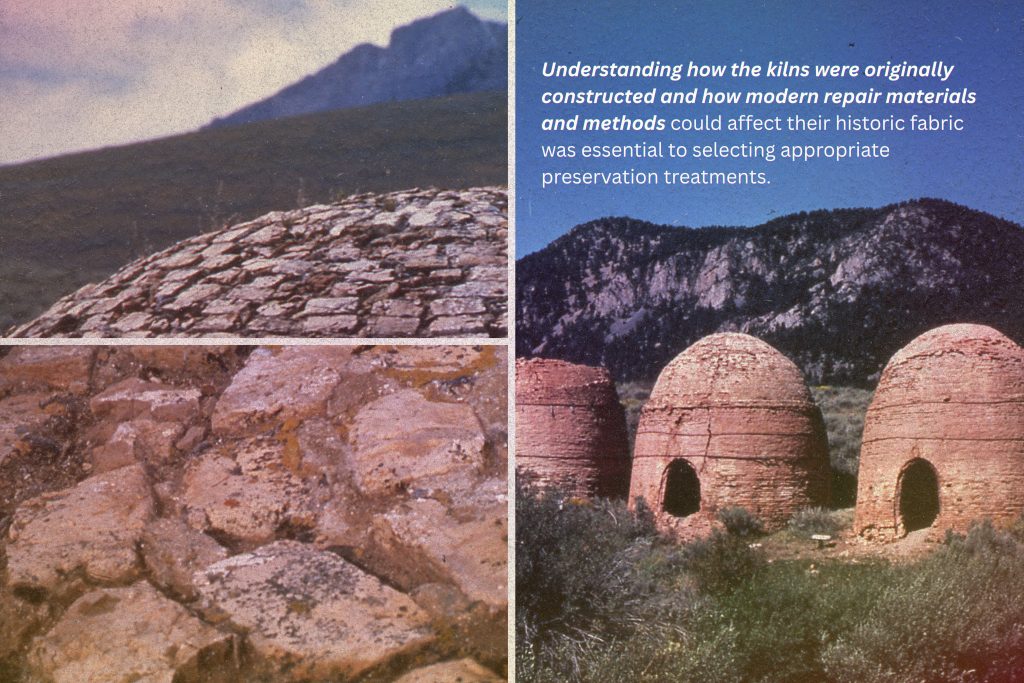
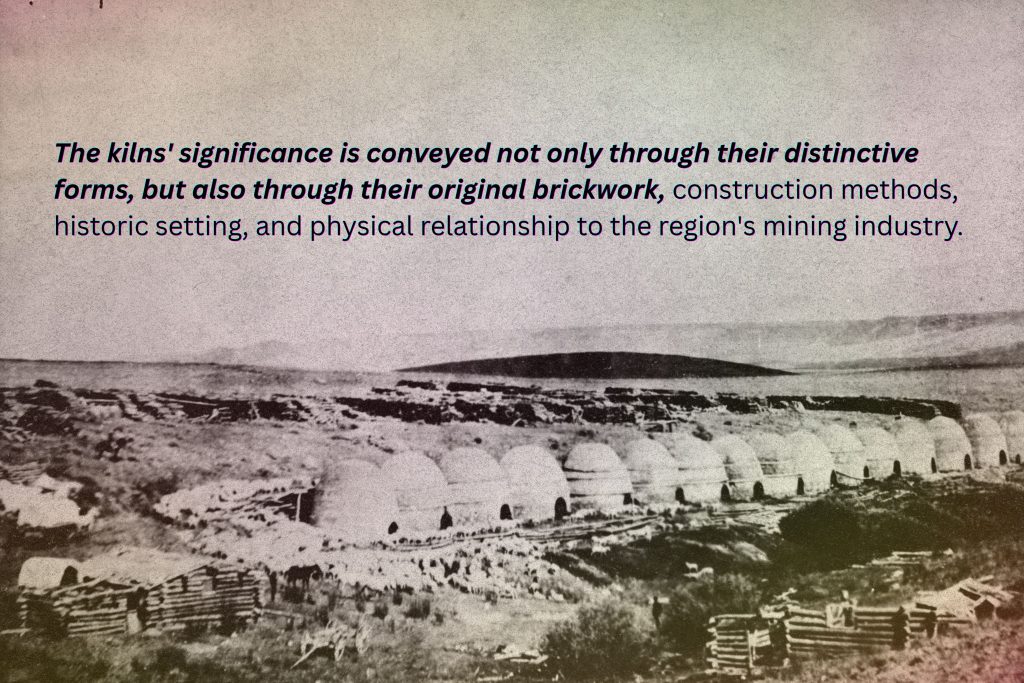
Built around 1885 in Idaho’s Birch Creek Valley, sixteen towering, beehive-shaped brick kilns once produced charcoal to fuel the smelting operations at nearby Nicholia. The charcoal supported the Viola Mine, an important source of lead and silver during the region’s late nineteenth-century mining boom.[1]
These massive masonry structures stood approximately 23 feet tall and could hold 30 cords of wood. Workers carefully controlled the burning process, slowly transforming harvested timber into charcoal over several days. The operation supplied tens of thousands of bushels of charcoal each month, and reflects an era when mining shaped the region’s economy, communities, and surrounding landscape.[2]
Following the decline of mining and smelting operations in 1889, the kilns were abandoned. Over time, twelve of the original sixteen structures disappeared, with many dismantled for their building materials. Today, only four survive, two retaining their distinctive domed roofs.[3]
[1] Wells, Merle. “Charcoal Kilns.” National Register of Historic Places Inventory—Nomination Form. Idaho State Historical Society, September 2, 1971. Listed February 23, 1972. National Register reference no. 72001577.
[2] Armstrong, Steve. “The Birch Creek Charcoal Kilns: A Historic Restoration Project to Preserve This Site for Another Generation.” Idaho Archaeological Society, March 3, 2026.
[3] Wells, Merle. “Charcoal Kilns.” National Register of Historic Places Inventory—Nomination Form. Idaho State Historical Society, September 2, 1971. Listed February 23, 1972. National Register reference no. 72001577.
HistoriCorps Preservation in Action: Stabilizing What Remains
Preserving historic industrial ruins requires a different approach than preserving a building for continued use. At Birch Creek, the priority was not to reconstruct the kilns or return them to operation, but to stabilize the surviving structures while retaining the historic materials and craftsmanship that convey their significance.
More than a century of exposure had weakened the masonry, while previous repairs using incompatible Portland cement mortar contributed to deterioration, demonstrating how even well-intentioned repairs can damage historic materials.
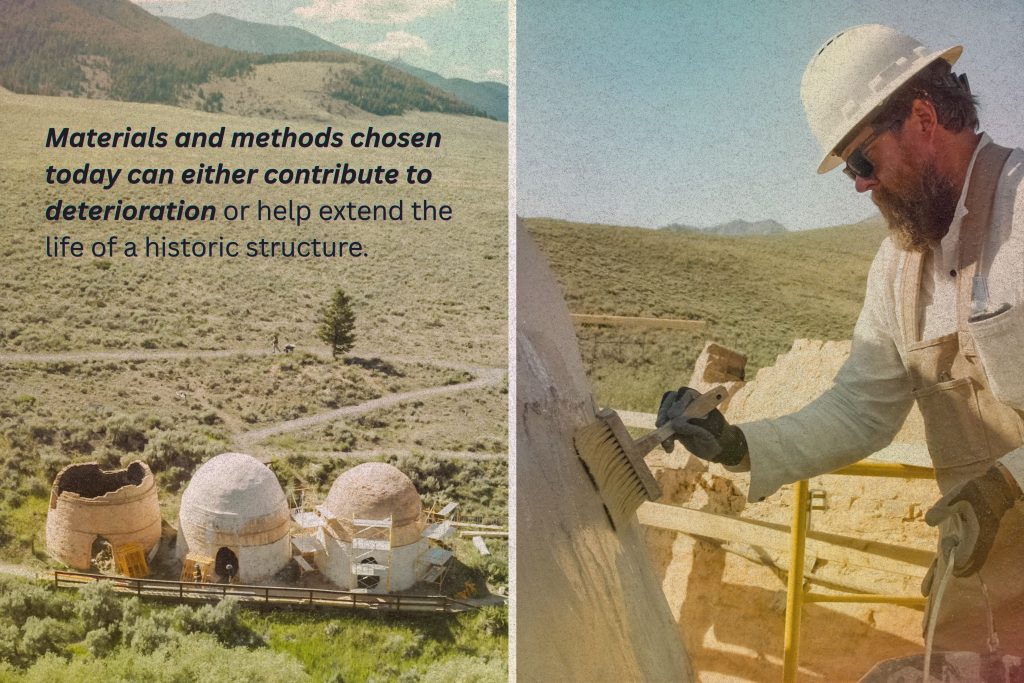
In 2024 and 2025, HistoriCorps partnered with the Caribou–Targhee National Forest to stabilize the two surviving domed kilns. Under the guidance of preservation professionals, volunteers carefully removed incompatible mortar, repointed deteriorated masonry with historically appropriate lime mortar, repaired cracks, and incorporated salvaged historic bricks where replacement was necessary. Protective mortar caps and limewash provide additional protection against weathering.
These treatments were guided by a fundamental preservation principle: retain as much historic material as possible while making the necessary repairs to prevent further deterioration.
Rather than rebuilding what had been lost, the work focused on protecting the surviving physical evidence of the site’s industrial past. Across five weeks of fieldwork, 17 volunteers and HistoriCorps staff contributed more than 1,300 hours toward preserving this remarkable piece of Idaho’s industrial heritage.
Section 106: Making Informed Preservation Decisions
Birch Creek demonstrates why understanding historic materials and construction methods is essential to preserving a property’s significance. The kilns’ significance is conveyed not only through their distinctive forms, but also through their original brickwork, construction methods, historic setting, and physical relationship to the region’s mining industry.
At Birch Creek, careful consideration of historic materials and construction techniques guided decisions about removing incompatible mortar, retaining original brickwork, and stabilizing deteriorated masonry. Understanding how the kilns were originally constructed and how modern repair materials and methods could affect their historic fabric was essential to selecting appropriate preservation treatments. This approach helped retain the kilns’ historic integrity, preserving both the craftsmanship and physical evidence that communicate an important chapter in Idaho’s history.
The distinction between incompatible Portland cement mortar and historically appropriate lime mortar illustrates why preservation decisions matter. Materials and methods chosen today can either contribute to deterioration or help extend the life of a historic structure.
At HistoriCorps, preserving historic integrity means recognizing that the materials and features of a place are part of its story. By stabilizing what remains at Birch Creek, our volunteers helped safeguard the physical connections to interpret history that might otherwise disappear.