Preserving Section 106
An Educational Series
Published November 6, 2026
Part 4 – Case Studies C, D, & E
Preservation in Action: Carrying Forward the CCC Legacy at Clear Lake
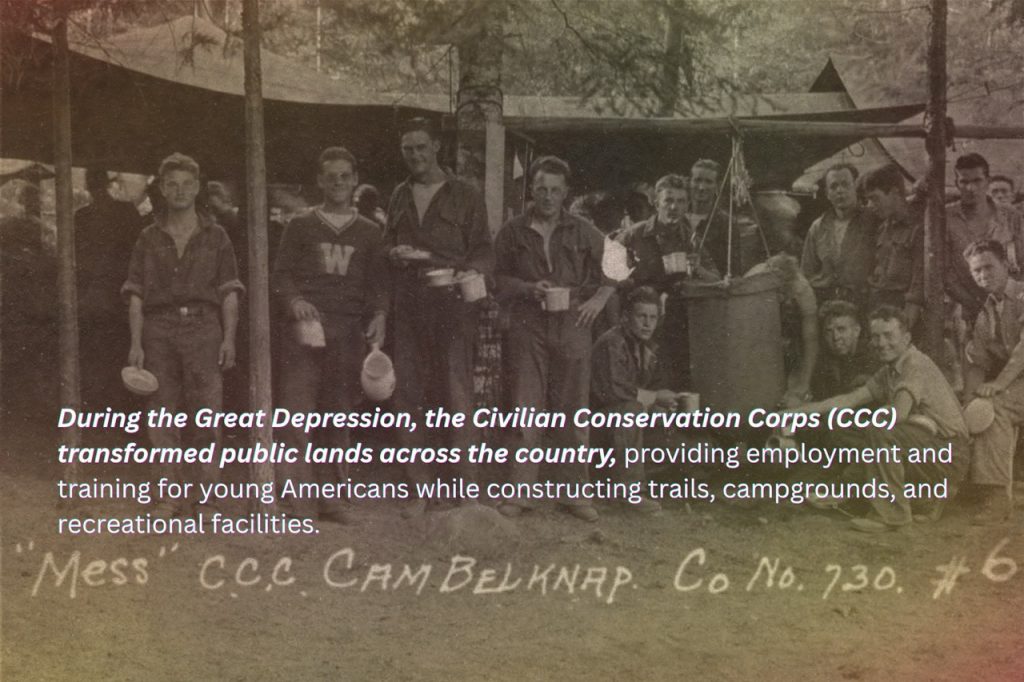
Nearly 90 years ago, young men serving in the Civilian Conservation Corps (CCC) helped transform America’s public lands — constructing trails, campgrounds, and recreational facilities that continue to serve visitors today. Their work reflected a growing national commitment to conservation, public recreation, and the skilled craftsmanship that defined an era of public works.
At Oregon’s Clear Lake Picnic Shelter, that legacy comes full circle. Built by the CCC during the Great Depression, the rustic log structure continues to serve its original purpose, while HistoriCorps volunteers carry forward the tradition of hands-on craftsmanship and public-land stewardship.
A Legacy of Conservation and Public Recreation
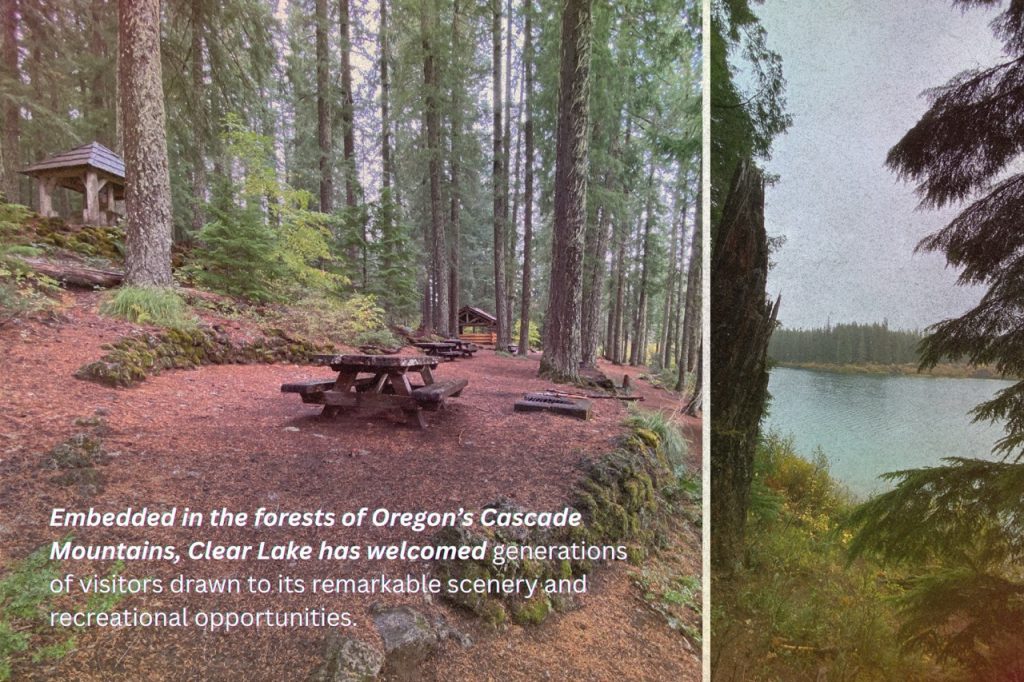
Embedded in the forests of Oregon’s Cascade Mountains, Clear Lake has welcomed generations of visitors drawn to its remarkable scenery and recreational opportunities. During the Great Depression, the Civilian Conservation Corps (CCC) transformed public lands across the country, providing employment and training for young Americans while constructing trails, campgrounds, and recreational facilities.
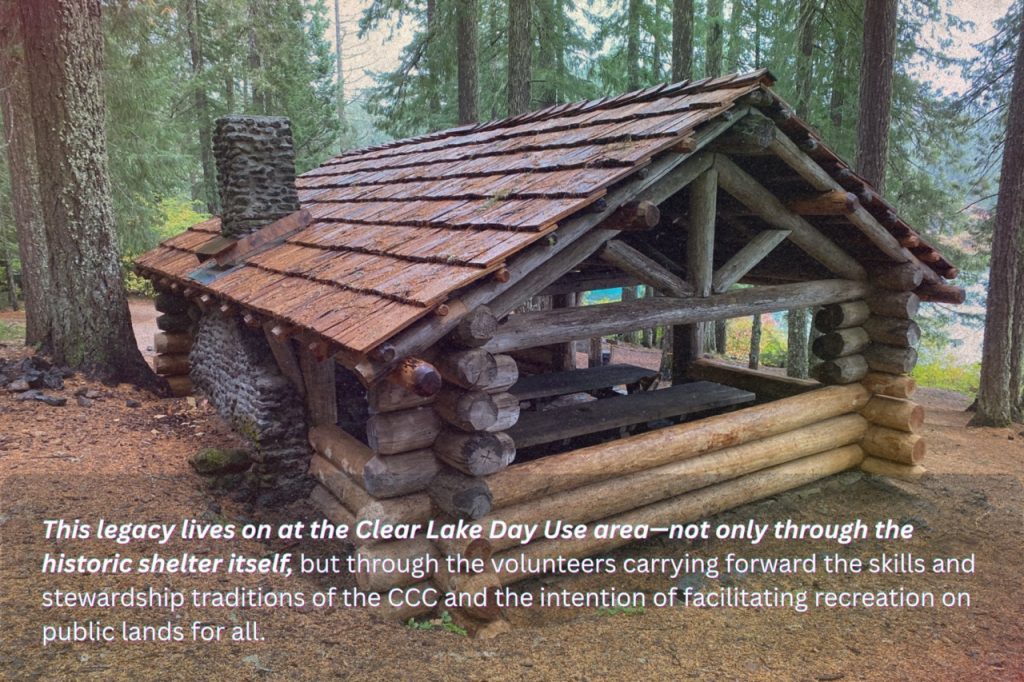
Built in 1937-1938, the Clear Lake Picnic Shelter exemplifies this legacy. Assembled with massive locally sourced logs, traditional joinery, and a prominent stone fireplace, the rustic shelter was designed to complement its natural surroundings while providing a gathering place for visitors.[1]
The shelter reflects an important shift in the Forest Service’s approach to recreation. As automobile travel and public demand for outdoor experiences increased, the agency developed facilities that made national forests more accessible while maintaining their natural character.
A 1991 Forest Service evaluation determined that the shelter and its neighboring Information Registry were eligible for listing on the National Register of Historic Places. Their significance reflects their association with CCC-era recreation development and their distinctive rustic design and craftsmanship.[2]
HistoriCorps Preservation in Action: Continuing a Tradition of Craftsmanship
Preserving a heavily used historic shelter requires balancing necessary repairs with the retention of materials, construction techniques, and architectural features that convey its historic character.
In 2021 and 2022, HistoriCorps partnered with the Willamette National Forest and other organizations to rehabilitate the Clear Lake Picnic Shelter.
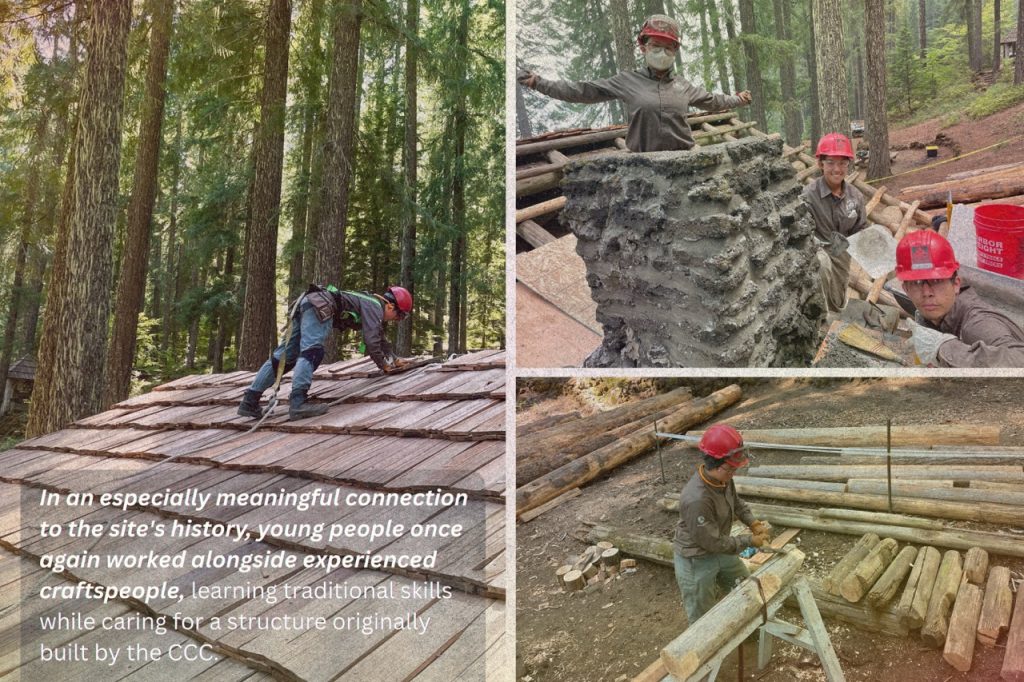
Volunteers and Northwest Youth Corps members replaced deteriorated structural logs, installed hand-split cedar shakes, and rehabilitated the shelter’s distinctive stone fireplace. Crews used traditional woodworking techniques to shape replacement logs to match the historic construction, helping preserve the shelter’s rustic appearance and craftsmanship.[3]
In an especially meaningful connection to the site’s history, young people once again worked alongside experienced craftspeople, learning traditional skills while caring for a structure originally built by the CCC.
These efforts helped extend the life of the shelter while maintaining its role as a gathering place for visitors.
Section 106: Retaining Integrity Through Continued Use
Clear Lake demonstrates how historic integrity can be retained even as buildings undergo necessary repairs and adaptations.
The 1991 evaluation recognized the shelter’s integrity of location, design, setting, materials, workmanship, feeling, and association. Together, these qualities allow the structure to communicate its connection to CCC craftsmanship and the development of public recreation on national forest lands.[4]
Section 106 requires federal agencies to consider how proposed work may affect the characteristics that make historic properties significant. This includes evaluating whether repairs or alterations could diminish the features and relationships that convey a property’s historic integrity.[5]
Preservation treatments executed at the Clear Lake recreation site such as retaining traditional log construction, matching replacement materials, and preserving the shelter’s distinctive fireplace illustrate how thoughtful restoration can address deterioration without unnecessarily sacrificing historic character.
At HistoriCorps, preserving historic integrity means more than maintaining a building’s appearance. It means protecting the physical evidence of its history, the craftsmanship of those who built it, and the connections that continue to give it meaning.
This legacy lives on at the Clear Lake Day Use area—not only through the historic shelter itself, but through the volunteers carrying forward the skills and stewardship traditions of the CCC and the intention of facilitating recreation on public lands for all.
[1] Bergland, Eric O. Clear Lake Picnic Shelter and Information Registry: An Evaluation of Historic Significance. USDA Forest Service, Pacific Northwest Region, Willamette National Forest, McKenzie Ranger District, September 30, 1991.
[2] Ibid.
[3] https://www.nuggetnews.com/story/2021/09/07/news/history-repeats-itself-at-clear-lake/32359.html.
[4] Bergland, Eric O. Clear Lake Picnic Shelter and Information Registry: An Evaluation of Historic Significance. USDA Forest Service, Pacific Northwest Region, Willamette National Forest, McKenzie Ranger District, September 30, 1991.
[5] Advisory Council on Historic Preservation. “Assessing Effects.” Section 106 Review Process.
Preservation in Action: A Landmark Shaped By Its Environment
For generations, lighthouses stood as vital guides along America’s waterways, helping mariners navigate dangerous shorelines and supporting the movement of people and goods. Built to withstand challenging conditions, these landmarks have endured decades of wind, water, and seasonal extremes. Yet, the very environments that made them essential have also contributed to their deterioration.
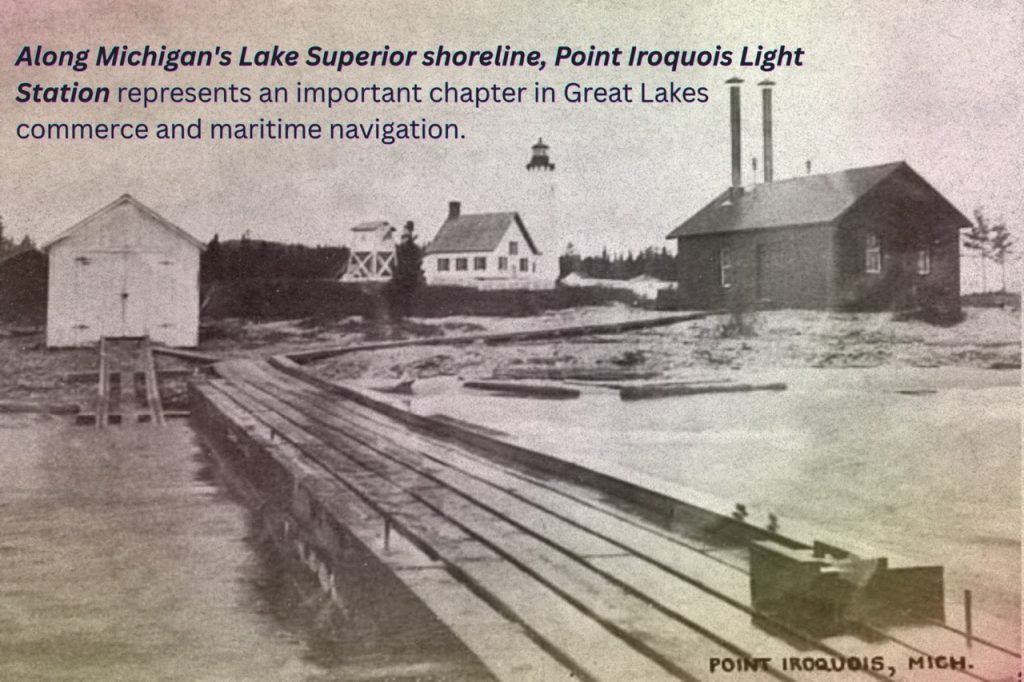
Along Michigan’s Lake Superior shoreline, Point Iroquois Light Station represents an important chapter in Great Lakes commerce and maritime navigation. Its preservation demonstrates how understanding historic construction methods and the behavior of traditional building materials is essential to protecting architectural integrity in a demanding environment.
A Beacon of Great Lakes History
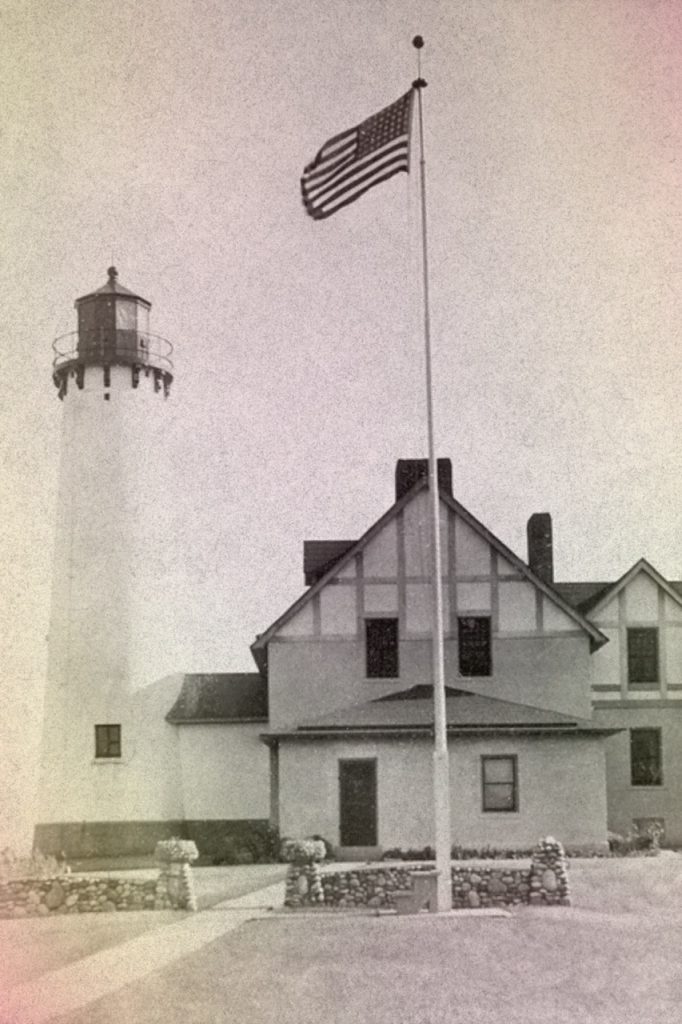 Established in 1855 near the entrance to the St. Marys River, Point Iroquois Light Station played an important role in the growth of Great Lakes shipping and commerce. Located near the Soo Locks, the lighthouse helped guide vessels navigating between Lake Superior and the busy commercial waterways connecting the Great Lakes.[1]
In 1870, the original wooden lighthouse and keeper’s residence were replaced with a brick tower and adjoining dwelling. As maritime traffic increased, the station expanded to accommodate additional keepers and their families, reflecting the growing demands of maintaining a critical navigational aid.[2]
The site also holds deeper cultural significance. The surrounding landscape has longstanding importance to the Anishinaabe people, while the light station itself preserves stories of the keepers, families, and local communities connected to its operation.
After more than a century of service, the station was decommissioned in the twentieth century and later became a public historic site. Recognized for its association with Great Lakes commerce, Point Iroquois was listed on the National Register of Historic Places in 1975.[3]
HistoriCorps Preservation in Action: Protecting Historic Masonry
Preserving a historic lighthouse along Lake Superior’s exposed shoreline presents unique challenges, particularly where decades of weathering and incompatible repairs have affected its masonry.
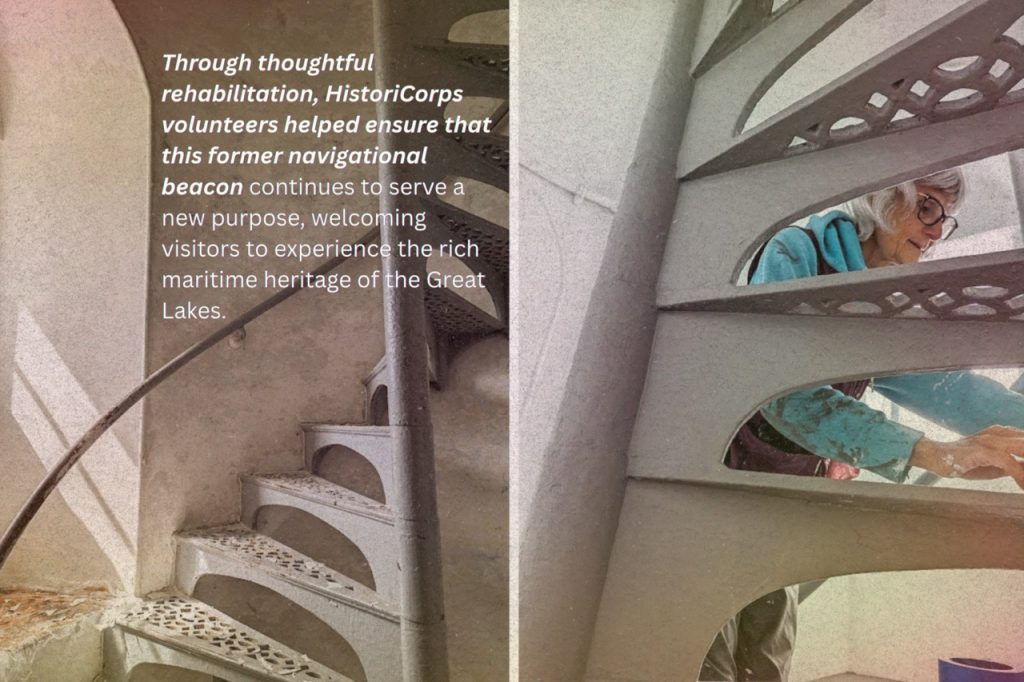
From 2021 through 2023, HistoriCorps partnered with the Hiawatha National Forest and YouthWork on a three-year rehabilitation project. Volunteers and project crews removed layers of incompatible latex paint that trapped moisture within the brickwork, contributing to cracking and spalling during Michigan’s freezing winters.[4]
Using appropriate preservation techniques, crews repaired deteriorated bricks and mortar joints and applied a breathable masonry coating that allows moisture vapor to escape. The scope of work also included repairs to the site’s historic stone boundary walls and interior masonry surfaces.
These treatments addressed active deterioration while retaining the original brickwork, architectural character, and historic construction methods that help convey the light station’s significance.
Section 106: Preserving Integrity Through Thoughtful Rehabilitation
Point Iroquois illustrates why understanding historic materials and construction techniques is essential to protecting a property’s integrity.
The station’s significance is reflected in its distinctive brick tower, interconnected keeper’s quarters, historic masonry, and relationship to the surrounding shoreline. Together, these features provide physical evidence of the station’s role in Great Lakes navigation and the lives of those who maintained it.
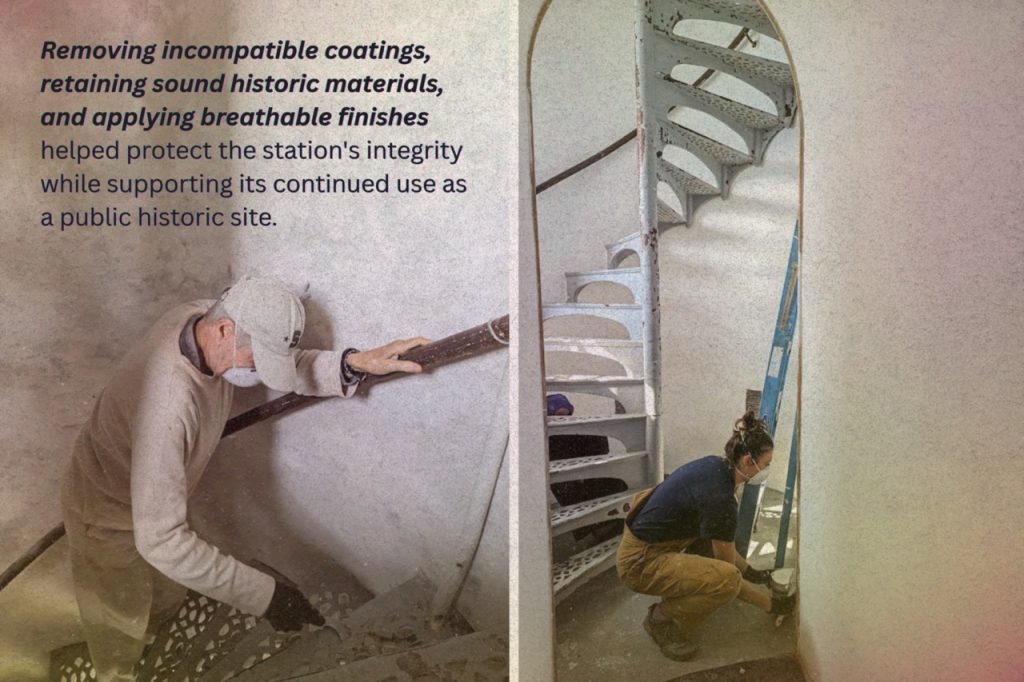
At Point Iroquois, understanding how historic brick masonry responds to moisture was essential to selecting appropriate repairs. Removing incompatible coatings, retaining sound historic materials, and applying breathable finishes helped protect the station’s integrity while supporting its continued use as a public historic site.
At HistoriCorps, preserving historic integrity means protecting the materials, craftsmanship, and features that allow a place to tell its story. The preservation of Point Iroquois Lighthouse demonstrates how understanding historic construction methods and selecting compatible treatments can extend the life of a landmark without compromising its historic character. Through thoughtful rehabilitation, HistoriCorps volunteers helped ensure that this former navigational beacon continues to serve a new purpose, welcoming visitors to experience the rich maritime heritage of the Great Lakes.
[1] National Park Service. “Point Iroquois Light Station.” National Register of Historic Places, reference no. 75000940. Listed May 30, 1975.
[2] Eckert, Kathryn Bishop. “Point Iroquois Light Station.” SAH Archipedia. Society of Architectural Historians, University of Virginia Press.
[3] National Park Service. “Point Iroquois Light Station.” National Register of Historic Places, reference no. 75000940. Listed May 30, 1975.
[4] U.S. Forest Service. “Three Year Restoration Project Wraps Up at Point Iroquois Lighthouse.” News release reproduced in SooLeader, October 8, 2023.
Preservation in Action: The Resourcefulness of Desert Life at Keys Ranch
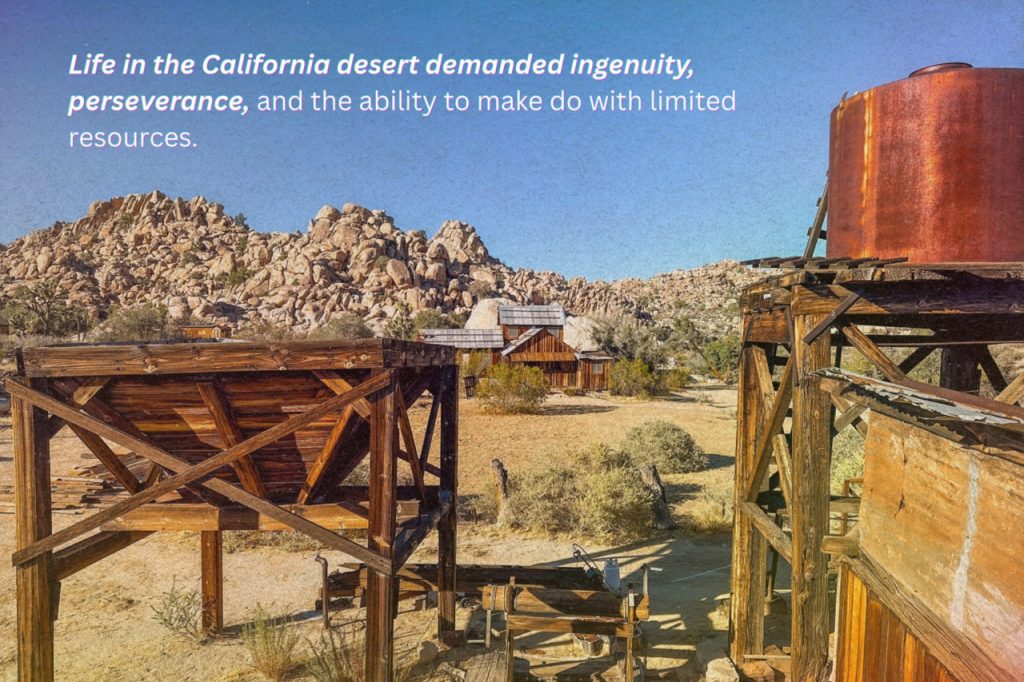
Life in the California desert demanded ingenuity, perseverance, and the ability to make do with limited resources. For early homesteaders, buildings and landscapes evolved through necessity, shaped by available materials, changing needs, and generations of adaptation. How do we repair a place made of so many small, fragile parts without losing what holds them together?
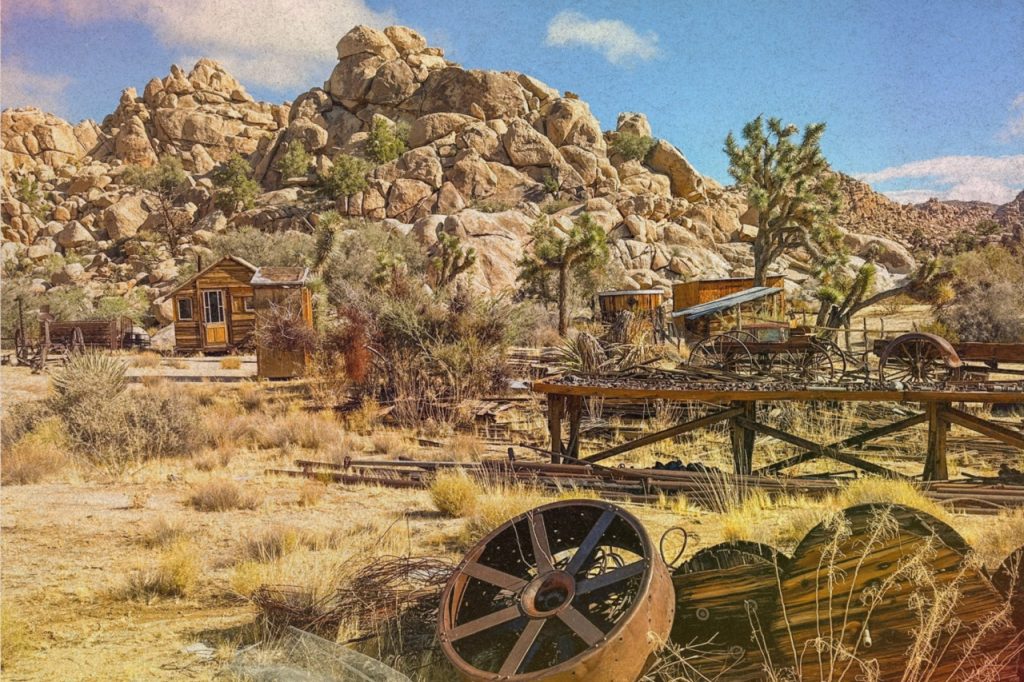
At Keys Ranch in California’s Joshua Tree National Park, this resourcefulness remains visible throughout the property. Preserving its history requires looking beyond individual buildings to understand how the structures, equipment, and surrounding landscape collectively tell the story of desert life.
A Homestead Built from what the Desert Provided
Nestled within the Wonderland of Rocks, Keys Ranch (also known as the Desert Queen Ranch or the Bill McHaney Ranch) preserves a remarkable record of homesteading in the Mojave Desert. William F. Keys, a rancher, miner, and homesteader, arrived in the area in 1910 and spent nearly six decades building a working ranch, which he occupied until his death in 1969.[1]
Constructed primarily from salvaged and locally available materials between 1910 and 1969, the site reflects the resourcefulness that desert life demanded. The complex includes the ranch house, schoolhouses, workshops, storehouses, an orchard, and the farm and mining equipment that remains on site.
Together, these resources illustrate the interconnected activities of ranching, mining, and everyday family life. The ranch came under National Park Service stewardship in 1973 and was listed on the National Register of Historic Places in 1975 for its significance in agriculture and industry.[2]
HistoriCorps Preservation in Action: Caring for a Historic Landscape
Decades of exposure to intense sunlight, wind, stormwater, and pests have taken a steady toll on the property’s historic structures and materials.
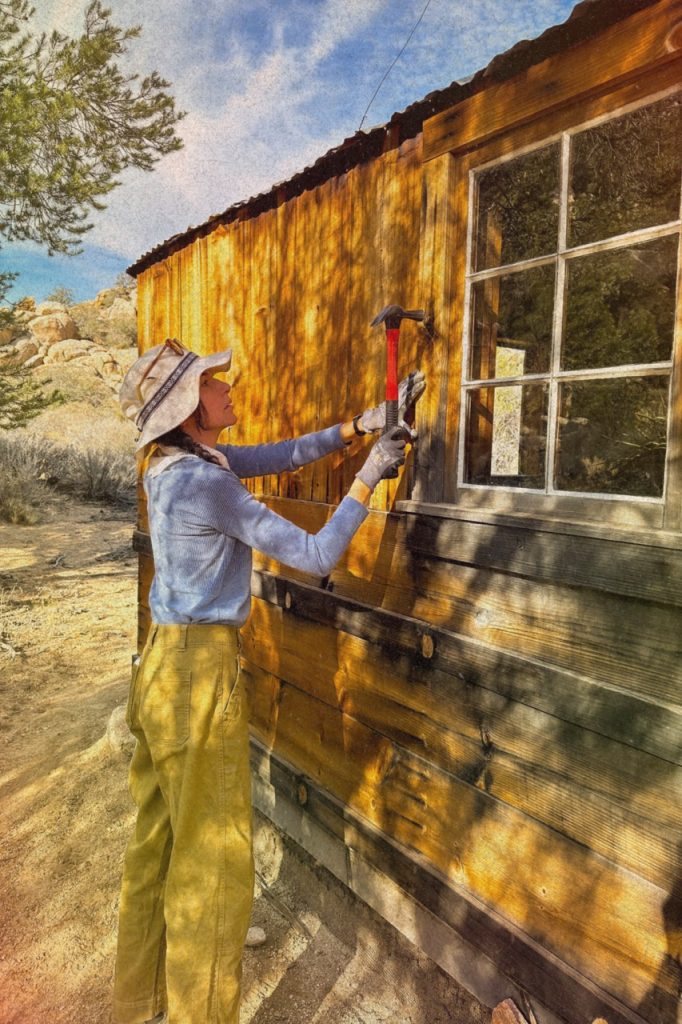 In autumn of 2025, HistoriCorps partnered with Joshua Tree National Park for four weeklong volunteer sessions. Working in collaboration with park cultural resources staff, volunteers rehabilitated the North house roof and repaired deteriorated siding, doors, and windows throughout the ranch. Additional deterioration discovered during fieldwork informed plans for a second phase.
HistoriCorps returned in fall of 2026 for five additional volunteer sessions, focusing on repairs to the Ranch House roof, including deteriorated rafter tails and flashing, along with windows, doors, siding, and pest-related deterioration. The scope of work also extended to the schoolhouses, the Machine Shed, and the McHaney Cabin.
Throughout the project, preservation treatments emphasized repairing historic materials where feasible and replacing deteriorated components in kind when necessary. Each volunteer session began with a tour of the ranch to help participants understand the place’s significance before they picked up a tool.
Section 106: Protecting a Landscape, Not Just a Building
Keys Ranch demonstrates why historic significance is not always contained within a single building. Its structures, equipment, orchard, fences, and surrounding desert landscape collectively convey the resourcefulness and daily activities of its former inhabitants.
At Keys Ranch, the National Park Service is responsible for considering how proposed work may affect characteristics that contribute to the property’s historic significance. NPS cultural resource staff helped develop the preservation scope and oversee applicable federal compliance requirements, including consultation with the State Historic Preservation Office (SHPO) when necessary. HistoriCorps, in turn, carries out the preservation treatments in accordance with the Secretary of the Interior’s Standards for the Treatment of Historic Properties. This collaborative approach extends beyond individual structures to the physical and spatial relationships that define the historic landscape and contribute to its integrity.
The effect shows up in the details. Deteriorated materials are repaired before they are replaced, and when replacement is unavoidable, it is done in-kind. Washed-out dry-stone foundations are stabilized. Small-scale objects like farm and mining equipment are raised onto composite lumber and retained on site. Even vegetation management requires consideration, so the setting stays natural.
Protecting the integrity of Keys Ranch means preserving the relationships between its buildings, objects, and landscape. Section 106 does not freeze a place in time. It is a process that asks what is original, what is contributing, what is at risk, and how to act with the lightest touch.
Keys Ranch reminds us that a historic place is more than its most recognizable building. At HistoriCorps, we believe that preservation works best when it protects the whole story: the structures, the objects, and the setting that give them meaning.
[1] National Park Service. “Keys Ranch Historic District Cultural Landscape.” Joshua Tree National Park. nps.gov/articles/725029.htm
[2] “Keys Desert Queen Ranch.” National Register of Historic Places Inventory—Nomination Form. Listed October 30, 1975. National Register reference no. 75000174.